
Article
MT5 CRM Integration Checklist for Brokerage Teams
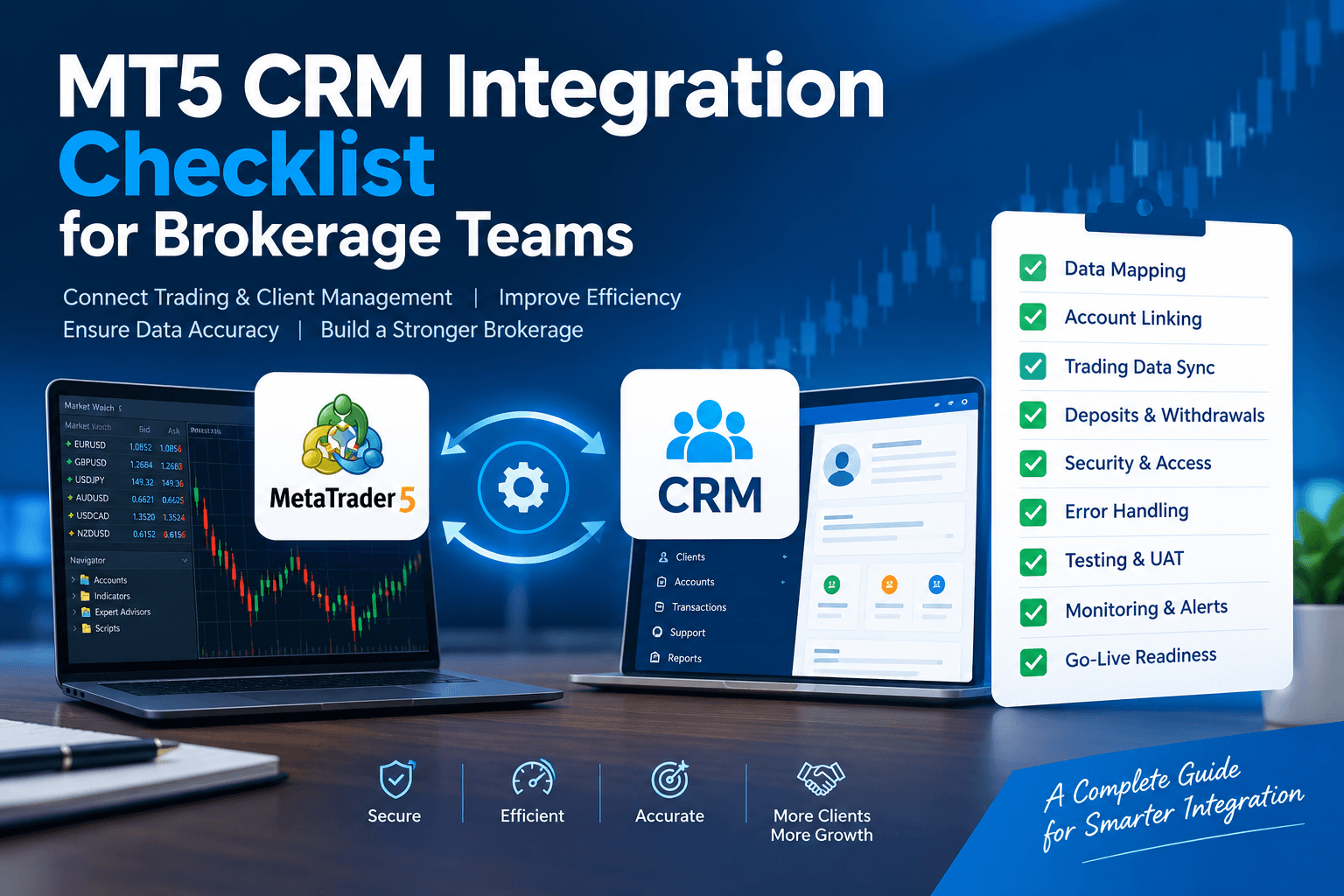
MT5 CRM integration connects a brokerage's customer records and operational workflows with its trading platform. Before requesting a quote, decide which records must move, which system owns them and who can authorize changes.
A CRM client is not the same thing as a trading account. A customer may hold several accounts, and a payment record is not proof that a trading-account balance was updated. Those distinctions matter more than a long feature list. Use this checklist to define the integration and the evidence needed before launch.
Confirm systems, access and interface authority
Record the CRM product and version, MT5 environment, hosting arrangements and existing connectors. Name the platform owner who can approve access. Give prospective developers sanitized requirements and documentation rather than production credentials.
MetaQuotes' broker information distinguishes interfaces by purpose: Manager API supports administration utilities, while Web API supports integration with web resources and company services. Their public descriptions do not establish your brokerage's licensed access, exact methods or permissions. Confirm those details against the documentation supplied for your environment.
The MQL5 Python reference describes a connection to an MT5 terminal. It is not interchangeable with authorized broker administration. Do not select a terminal-based library simply because an online example can retrieve account information.
Choose a limited first scope
List the workflows you need: customer-to-account linking, account status, trading-history reporting, payment reconciliation or another defined operation. For each, specify the direction of data flow, required freshness and whether the integration reads data or changes it.
A reporting-only connection needs different controls from account creation or balance operations. Treat deposits, withdrawals and trading instructions as separate workstreams with explicit authorization. Do not assume the CRM should execute every action it displays.
Identify dependencies such as payment providers, compliance review and affiliate attribution. Keep optional features out of the first release unless an operational requirement justifies them.
Write the data map and ownership rules
Create a field-level mapping with the source, destination, type, allowed values, identifier and update rule. Include the environment or server in an account's identity so a demo login cannot accidentally link to a live account.
For a fictional mapping example, CRM client C-104 holds one demo account and two live accounts. Store separate account links under the client rather than overwriting a single login field. Use actual verified identifiers in production; this example does not prescribe a particular database schema.
Define who owns each field. Contact details might originate in the CRM, while trading records come from MT5. A displayed balance or equity figure should include its observation time and currency. Specify how the interface marks stale or unavailable data instead of showing an old value as current.
Agree how to handle missing records, conflicting updates and account-group changes. Never silently create a new customer match from an ambiguous name or email alone.
Map account groups, account types and symbol identifiers explicitly instead of assuming names match across systems. If KYC status is part of the scope, identify the authorized compliance source, allowed transitions and review owner. A CRM label or successful account link must not silently grant trading permissions or override a compliance decision.
Separate payment status from balance confirmation
Describe transaction states and what evidence moves a request between them. Requested, approved, submitted, confirmed, failed and uncertain are useful distinctions, but adapt the names to your actual workflow.
A payment-provider acknowledgment does not, by itself, confirm a corresponding MT5 operation. Keep references linking the payment, internal request and platform result. Define a reconciliation process that can find missing, duplicated or mismatched entries without making another financial change.
If a timeout occurs after submitting a balance-changing request, the outcome may be unknown. Do not blindly retry it. Hold the request for reconciliation against authoritative records and escalate if the result cannot be established. A local request identifier alone does not prove that the remote interface supports idempotency.
Make failure handling operation-specific
Document which failures are safe to retry, the retry limit and the responsible team. A temporary failure on a read request may allow a bounded retry. A rejected permission check needs investigation. An uncertain financial mutation needs reconciliation before any decision to resubmit.
Deduplicate incoming events using stable source identifiers and durable processing records. Test repeated and out-of-order events. Preventing a duplicate CRM row and preventing a duplicate remote balance change are different requirements; demonstrate each separately where the scope includes it.
Log timestamps, correlation references, operation type and final disposition. Restrict access to logs and avoid recording credentials or unnecessary personal data.
Set security boundaries before development
Use separate test and production access, protected credential storage and the least privileges required for the agreed operations. Confirm transport protection and network restrictions with the platform owner. Keep credentials out of source code, proposals and shared screenshots.
Assign who can approve sensitive requests, change mappings and access customer information. Document credential rotation and revocation. Decide how the service will stop new writes if authority is withdrawn or monitoring reveals an unsafe mismatch.
Test business scenarios and recovery
Use an authorized non-production environment and synthetic customer data. Never treat a successful data fetch as proof that financial workflows are safe. Agree expected results before testing.
- Link new and existing customers with multiple demo and live accounts.
- Reject invalid accounts, missing permissions and environment mismatches.
- Check orders, positions, deals and partial closures as distinct records where relevant.
- Interrupt a request before and after submission; verify the different recovery paths.
- Deliver duplicate and out-of-order events; check durable deduplication.
- Simulate stale data, queue backlog and reconciliation mismatches.
- Revoke credentials and confirm that unauthorized operations stop.
Operations staff should review the results alongside developers. Record evidence, unresolved defects and the person authorized to accept each workflow.
Plan monitoring, rollout and support
Compare account mappings and agreed financial records before launch. Set alert thresholds for synchronization delay, failed requests, uncertain operations and unresolved discrepancies. Define who receives alerts and how quickly they must investigate them.
Roll out to a controlled scope with a named go-live approver. A rollback should stop or isolate further writes and preserve evidence. It must not assume that reversing a software release reverses completed financial transactions.
Maintain interface versions, mappings, permissions, recovery steps and support contacts. Re-test affected workflows after platform, CRM or provider changes.
Questions to send with a proposal request
- Which systems and versions are involved, and who authorizes access?
- Which exact reads and writes are required, in each direction?
- What freshness, reconciliation and acceptance evidence is expected?
- Which test environment and technical documentation can the team provide?
- Who owns go-live, uncertain transactions, incident response and ongoing support?
- What budget, delivery window and dependencies must the provider evaluate?
Use ALHarih's marketplace overview for hiring context. A published general ERP service is not evidence of specialist MT5 capability. Ask the provider to demonstrate relevant experience and confirm access before agreeing implementation scope.
Read next
View all articles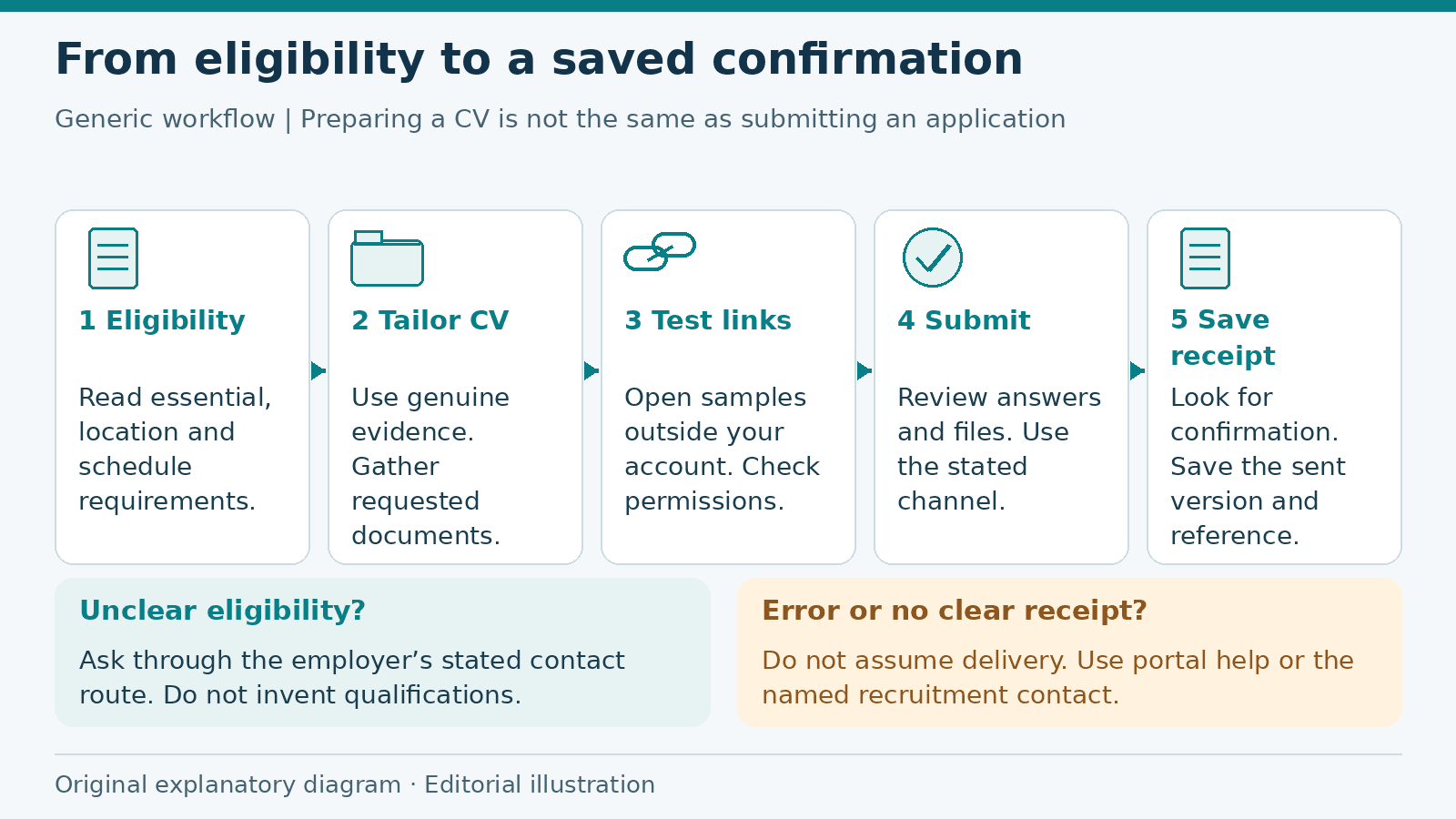
Job Application Checklist: From Eligibility to Submission
Prepare a job application from eligibility checks to submission confirmation, with a fictional worked example, document guidance and a practical checklist.
Read more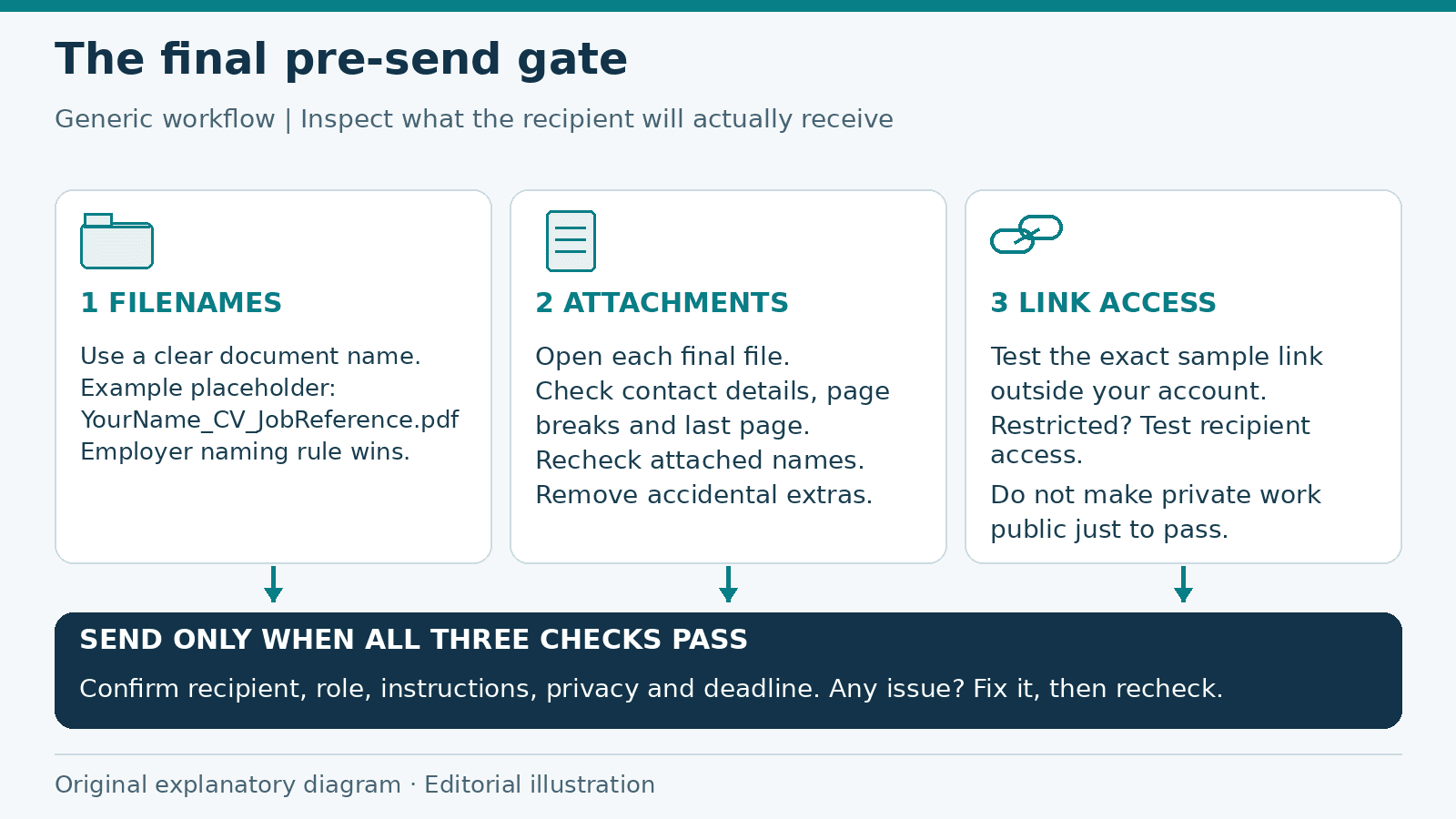
Job Application Checklist: Final Checks Before You Send
A final pre-send review of application filenames, attachments, link permissions and private information, with a checklist to catch preventable mistakes.
Read more
Custom ERP Project Checklist for Small Businesses
Plan a successful custom ERP implementation with this small business checklist covering requirements, budgeting, software development, data migration, security, testing, and deployment.
Read more
Comments (0)
Sign in to join the discussion.
No comments yet. Start the conversation.