
Article
How to Tailor Your CV to a Job Description
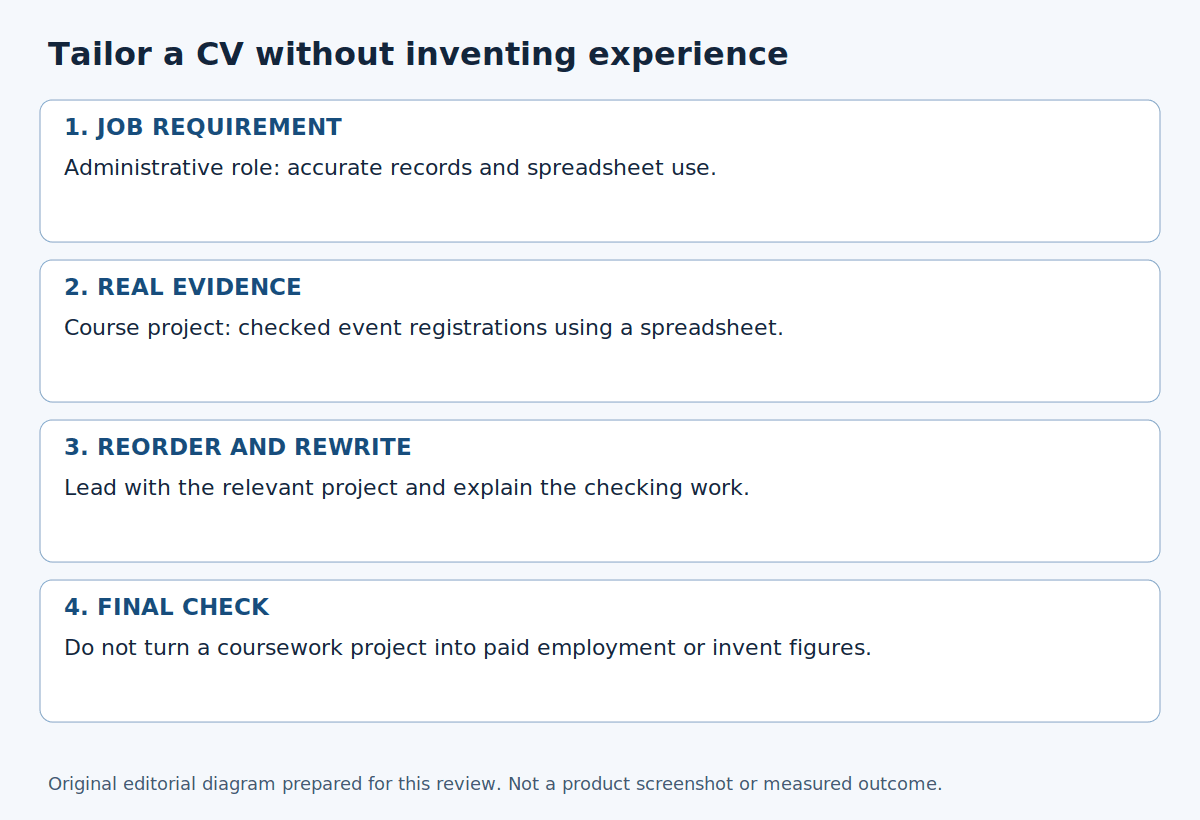
You can have relevant experience and still make it difficult to find on your CV. A recruiter looking for recordkeeping may have to search through a long paragraph about general office duties. Tailoring means bringing the right evidence forward, without changing the facts.
To tailor your CV to a job description, read the requirements, match them to work you have actually done and adjust the order and wording. Keep a full master CV so you can make a focused version for each role without losing your history.
Separate essential requirements from preferences
Read the full advert, including the application instructions. Save a copy for reference. Mark the essential qualifications, core responsibilities, preferred experience and practical conditions such as location or working hours. Do not assume repeated words are more important than an explicit requirement.
The National Careers Service recommends looking at the job advert and essential criteria when tailoring a CV. Use those requirements to decide what evidence to include, rather than copying the advert into your document.
For an administrative vacancy, your list might include accurate records, spreadsheet work, scheduling and written communication. Keep a separate note of requirements you cannot demonstrate. A relevant project can support a transferable skill; it does not replace a mandatory licence or qualification.
Build a requirement-to-evidence map
Before rewriting, make a small working table. In one column put the requirement; in another, your evidence. Add where it belongs in the CV and any limits you need to explain. This is a planning note, not something you must send to an employer.
A hypothetical applicant might map "spreadsheet recordkeeping" to a course event-registration project. Their evidence could include maintaining entries, checking duplicates and sharing updates. The CV should label it as academic work, not employment. If the same advert asks for payroll software they have never used, that requirement remains a gap.
Look beyond job titles. Paid work, volunteering, coursework and personal projects can provide different kinds of evidence. Keep their context clear and describe your own contribution. A team result does not automatically belong to every participant.
Use accurate terms from the advert
If the employer asks for inventory management and you have handled stock records, use wording that explains the connection. Name tools, methods and qualifications accurately. Do not list software you have only heard of or turn a short introduction into proficiency.
There is no useful reason to repeat a phrase in every section. Put it where the evidence belongs. A skills entry may name spreadsheet work, while an experience bullet explains what you did with a spreadsheet. Avoid hidden keywords or copied lists of requirements.
Matching the wording cannot guarantee selection. The purpose is to make a genuine connection easier to understand, including for someone unfamiliar with your previous workplace or course.
Rewrite the summary around the role
A summary should help the reader understand your background and relevant strengths. "Motivated professional seeking an opportunity in a growing organisation" says little about either. Replace it with a description you can support elsewhere in the CV.
For a hypothetical experienced administrative applicant, that might be: "Administrative professional with experience in document preparation, recordkeeping and scheduling. Maintains shared office records and coordinates meeting information across a team." Use this only as a model; it is not a description of Shanta's work or a claim about your own experience.
An entry-level applicant should not borrow the experienced applicant's title. They could describe their qualification and project work instead. Write the summary after choosing the supporting evidence so it does not promise skills the rest of the CV cannot show.
Put the most relevant bullets first
Keep employers, titles and dates accurate. Within each role, give the most relevant duties and achievements more space. You do not need equal detail for every task, and you should not rearrange dates to hide an inconvenient period.
For example, a hypothetical quality-inspection applicant could replace "Responsible for checking product quality" with "Inspected incoming components, recorded defects and reported non-conformities to the production team." The second version explains the activity without inventing an improvement percentage.
Use a result when you can substantiate it. If you cannot verify a number, describe the output, responsibility or problem handled. Harvard's resume guidance recommends specific, active and fact-based language. A precise account of the work is more useful than an unsupported claim that you transformed performance.
Bring education and skills into the right place
If you are early in your career, relevant education and projects may deserve space before a short work history. With substantial related experience, work history may be the stronger opening section. Keep each section clearly labelled so the reader can distinguish study, volunteering and employment.
Include the correct qualification names, institutions and dates. Label an unfinished course as in progress rather than completed. If the employer requires a certificate you do not hold, do not imply that a related class is equivalent.
For career changes, explain the transferable activity rather than claiming a new occupation prematurely. Handling customer complaints may demonstrate communication and issue handling; it does not by itself establish technical support expertise in an unfamiliar product.
Worked example: a graduate applying for administration
This is a fictional example, not Shanta's employment history or a successful-hire case study. The vacancy asks for recordkeeping, spreadsheet skills and clear written updates. The graduate has a business qualification and helped organise an event during a course.
The first draft says "Helped with a group assignment". After checking their actual contribution, the applicant writes: "Maintained the course project's registration spreadsheet, checked duplicate entries and documented updates for the team." That sentence connects the requirement to an activity and keeps its academic setting visible.
The applicant moves this project above less relevant activities and adds the spreadsheet work to the summary. They leave payroll software out because they have not used it. They also keep the original employment dates and avoid describing the course project as an administrative job.
Before applying, the graduate checks that they could explain the work in an interview. Which entries did they maintain? What did they check? What belonged to someone else? If they cannot answer, they revise the wording rather than relying on a phrase that merely sounds convincing.
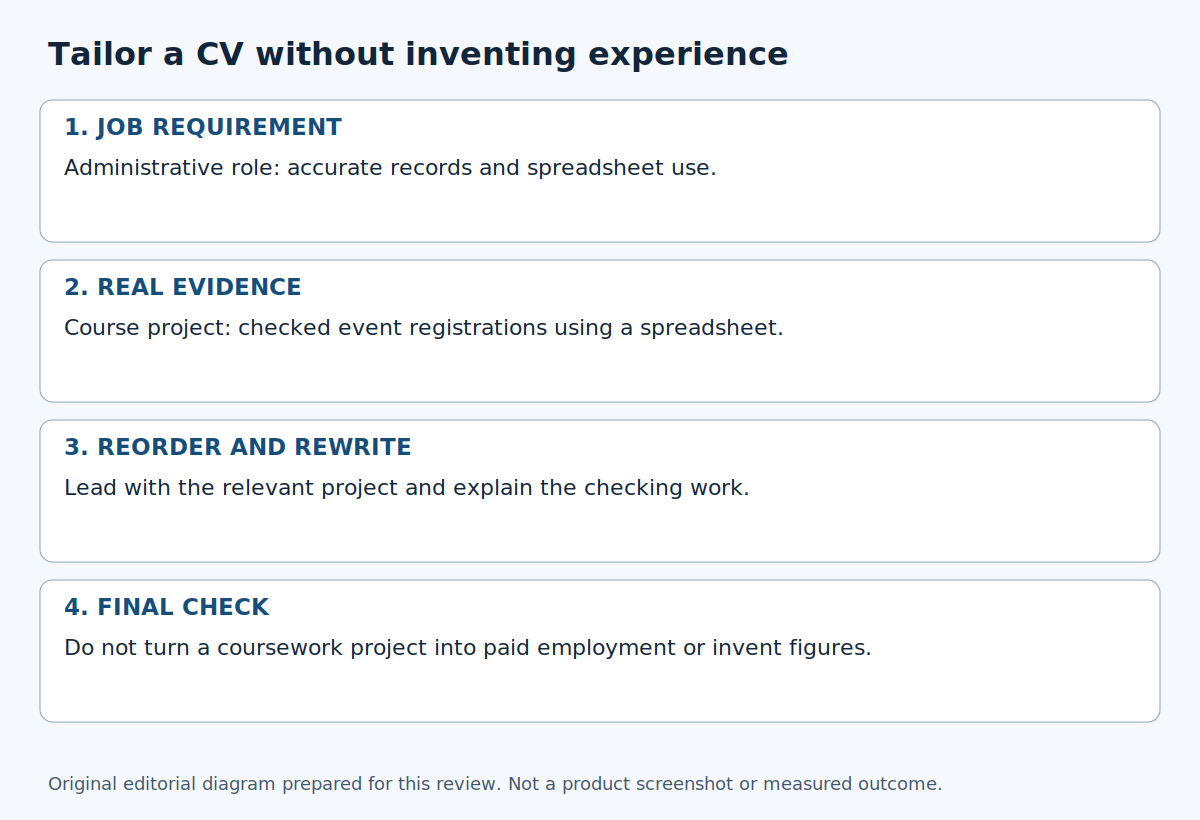
Original explanatory diagram generated for this editorial correction; not a product screenshot. The diagram contains no copied image assets. Source: this article’s worked example. No third-party image licence is asserted.
Check the final document, not just the draft
Use clear section headings, readable type and consistent dates. Follow the employer's file instructions. Open the exported document to check that lines have not been cut off, links work and the text remains readable. A plain filename such as YourName_CV_JobTitle.pdf is easier to identify than a string of version numbers.
Do not assume a template or keyword score proves compatibility with every recruitment system. This guide has not tested your file against an employer's software. If the application form extracts information from the upload, review those fields before submitting.
Final application checklist
- Can the reader find evidence for the most important requirements?
- Are summary claims supported elsewhere in the CV?
- Are project and volunteer examples labelled accurately?
- Have you excluded skills, qualifications and results you cannot support?
- Are titles, dates, contact details and links correct?
- Does the final file follow the employer's instructions?
- Have you kept a copy of this version and the advert?
Prepare your version in ALHarih
The public ALHarih Resume Builder page describes browser editing and PDF download. You can use your requirement-to-evidence notes alongside the ALHarih CV builder guide, then inspect the final document yourself.
Those public pages were checked; saving, downloading and submitting an application were not exercised for this article. Browse related ALHarih articles if you need more examples. Preparing a CV is separate from submitting an application, and neither a template nor tailored wording guarantees an interview.
Read next
View all articles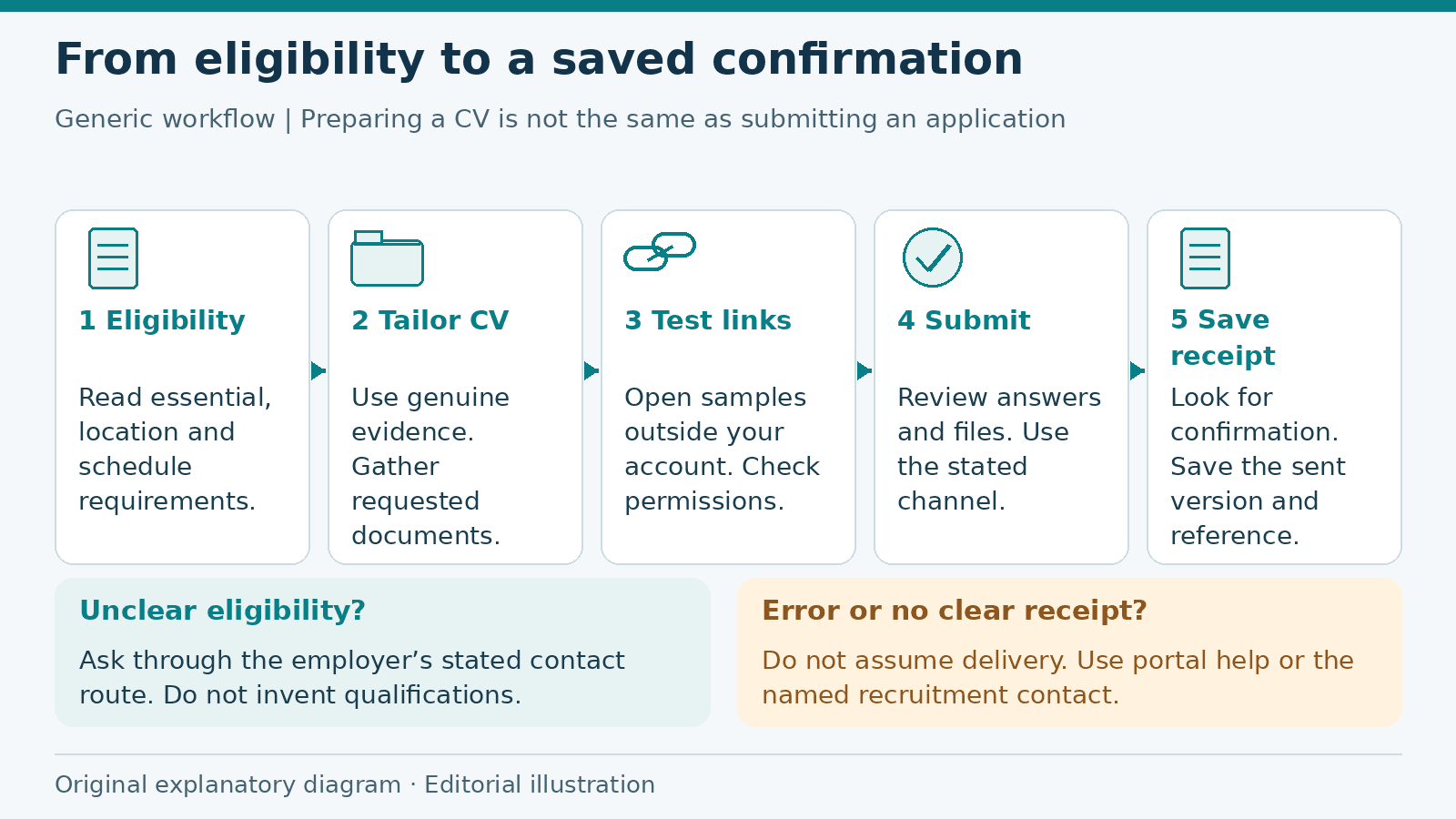
Job Application Checklist: From Eligibility to Submission
Prepare a job application from eligibility checks to submission confirmation, with a fictional worked example, document guidance and a practical checklist.
Read more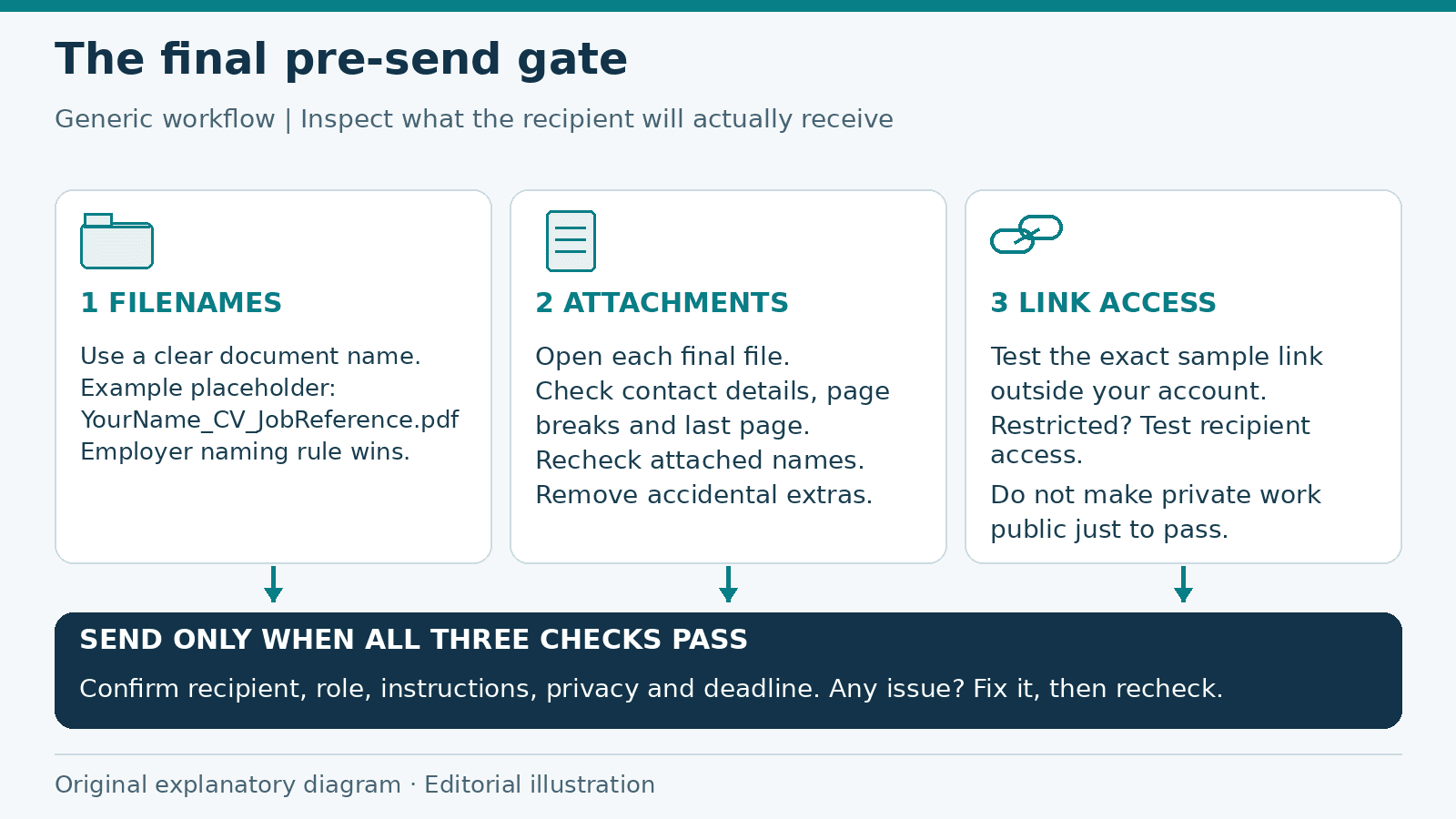
Job Application Checklist: Final Checks Before You Send
A final pre-send review of application filenames, attachments, link permissions and private information, with a checklist to catch preventable mistakes.
Read more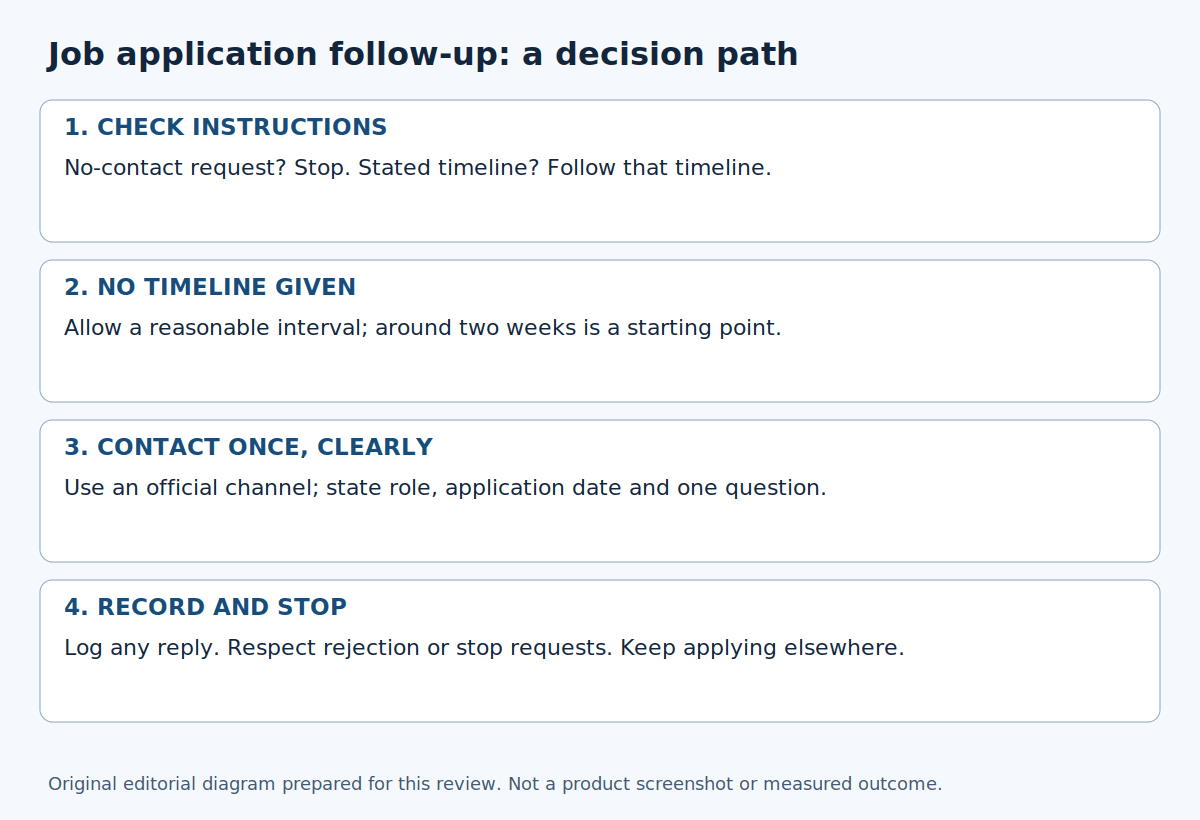
How to follow up after applying for a job
Check the employer's instructions before following up. Use concise email options, choose an appropriate contact route and record when to wait or stop.
Read moreExplore related career opportunities
Find roles that fit your location and interests. Each listing explains its current or planned vacancies.
All locations, roles and employment types
Comments (0)
Sign in to join the discussion.
No comments yet. Start the conversation.