
Article
How to Learn German Without Getting Lost in Grammar
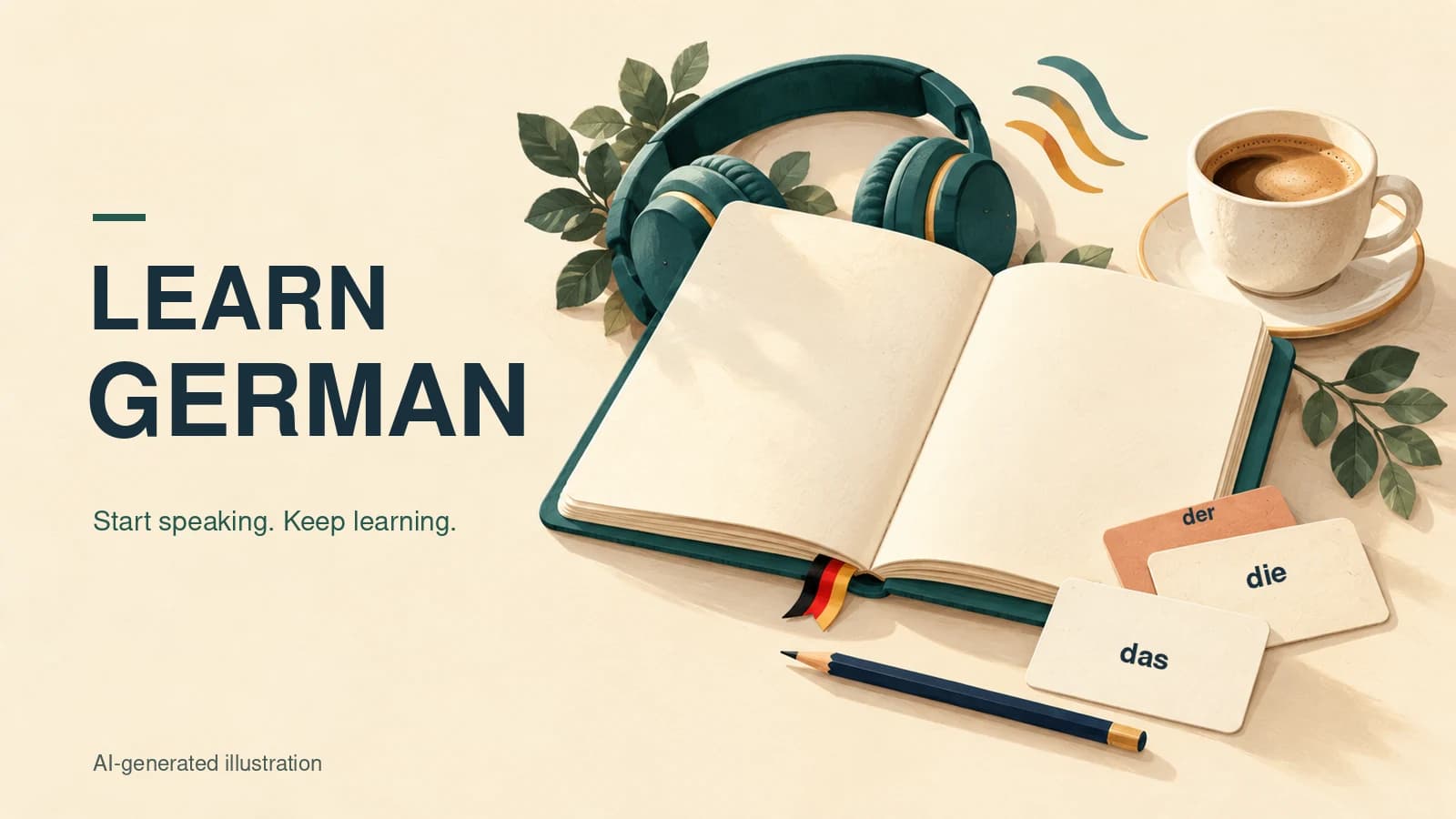
You decide to learn German.
Maybe you want to study in Germany, communicate with colleagues or finally understand a conversation without waiting for the subtitles.
You open a lesson. Learn a few words. Say Hallo. Everything feels manageable.
Then you meet der, die and das.
A little later, German introduces cases, adjective endings and verbs that seem to have their own travel plans.
Suddenly, saying “I would like a coffee” feels like it needs an engineering degree.
But you do not need to understand the entire language before you start using it. You need a useful starting point, regular practice and permission to sound like a beginner.
Here is a practical way to learn German without turning every study session into an argument with a grammar book.
Start with something you actually want to do
“I want to become fluent” is a direction. It is not a very clear task for this evening.
“Introduce myself without reading from my phone” is a task.
So is ordering food, explaining what you do for work or asking someone to repeat a sentence.
Choose situations that matter to you. Your first goal does not have to impress anyone. It just needs to give your learning a purpose.
For example:
- Ich lerne Deutsch. — I am learning German.
- Ich möchte einen Kaffee, bitte. — I would like a coffee, please.
- Können Sie das bitte wiederholen? — Could you please repeat that?
That last sentence deserves a permanent place in your vocabulary. You do not have to understand everything immediately. You need a way to keep the conversation going.
Learn words with the information you will need later
German nouns come with grammatical gender. That is why you encounter der, die and das.
Instead of learning only Buch for “book,” learn das Buch. Where practical, learn the plural too: die Bücher.
The same approach gives you:
- der Tisch — die Tische: the table — the tables.
- die Tasche — die Taschen: the bag — the bags.
You are not learning extra decoration. You are learning information you will need when building sentences.
Also, grammatical gender is not a reliable guide to an object's personality. There is no useful reason to spend your afternoon asking what makes a table masculine.
Learn the noun as a small package and move on.
Then put it into a sentence. A word you can use is more helpful than a word you only recognize on a flashcard.
Use grammar to explain sentences, not delay them
Grammar matters. Avoiding it completely will not make German simpler.
But trying to finish grammar before speaking is like trying to read every driving manual before touching a steering wheel.
Start with a useful sentence:
Ich lerne Deutsch.
Then change it:
Heute lerne ich Deutsch. — Today I am learning German.
Notice what happened. In this main-clause example, the finite verb, lerne, stays in the second position. The first position is now occupied by heute.
That is a concrete pattern you can practice. It is easier to work with than a page of rules that has not yet connected to anything you want to say.
You will meet other sentence patterns later. This one is not a rule for every German clause.
The idea is simple: learn a pattern, use it, then understand it more deeply.
You do not need to invite every exception into your first lesson.
Listen to German you can work with
Putting on a fast German discussion and understanding almost nothing can make the language feel impossible.
That does not automatically mean you are bad at languages. It may mean the material is too difficult for your current level.
Choose a short recording with a transcript. Listen once, read what was said, then listen again.
Pick out a useful phrase. Pause and repeat it aloud. Listen for the difference between your version and the recording.
Do not turn one clip into an obligation to memorize every word. Take something usable from it and return to it later.
Pronunciation also deserves attention early. Listen carefully to sounds such as ä, ö, ü and the different pronunciations of ch, rather than assuming their spelling tells you everything.
Your target is understandable speech, not winning an award for sounding as though you grew up in Hamburg.
Speak before you feel ready
There is a very comfortable version of language learning where you watch lessons, understand the explanations and never have to produce a sentence yourself.
It feels productive. It also lets you avoid discovering what you cannot yet say.
Give yourself small speaking tasks:
- Introduce yourself without a script.
- Describe the room around you.
- Explain what you are doing today.
- Ask and answer a simple question.
If you have a teacher or language partner, ask for focused feedback. One useful correction you understand is a reasonable place to start.
If you are practicing alone, record a short voice note. Listen back. Find a gap, check it and try again.
The first recording may sound awkward. That is allowed. It is practice, not your application to become a German news presenter.
Use AI as a practice partner, not the final authority
An AI tool can give you another place to practice when nobody else is available.
You could ask:
Act as a patient German conversation partner for a beginner. Ask one short question at a time. After I answer, correct one important mistake and explain it in simple English. Keep the conversation about introducing myself and daily activities.
You can also ask it to turn vocabulary into a short dialogue or help you attempt the same conversation again.
But treat its answers as practice material, not an unquestionable answer key. Check unfamiliar grammar or disputed corrections against a reliable dictionary, a course or a qualified teacher.
And do not let the tool do all the speaking. Reading a perfect answer it generated is different from building your own.
The useful part is your attempt.
Build a routine small enough to repeat
A study plan should fit your actual life, not the imaginary version where you suddenly have unlimited free time and excellent discipline.
Try a simple 20-minute session:
- Five minutes: Recall words and phrases from an earlier lesson before checking the answers.
- Five minutes: Listen to a short recording and follow its transcript.
- Five minutes: Speak about a familiar topic or repeat a dialogue with small changes.
- Five minutes: Write a few sentences and check something you were unsure about.
This is a suggested routine, not a formula that guarantees a particular level. Adjust it to your needs and use it alongside whatever course or teaching support you choose.
Some days, you may have more time. Some days, much less.
If you miss a session, continue with the next one. You do not need to turn a missed Tuesday into a personal identity crisis.
Measure what you can do, not just what you completed
A lesson streak tells you that you returned to an activity. It does not tell the whole story of what you can say.
Try returning to the same practical task after a period of study:
Can you introduce yourself with less help? Can you ask a follow-up question? Can you understand a familiar recording without reading every line?
Those are useful signs to look for.
Avoid making an arbitrary fluency deadline the only measure of success. Your starting point, available time, learning environment and goals all matter.
Learning slowly is not the same as learning nothing.
You do not need perfect German to begin
You will forget words. You will choose the wrong article. You may understand a sentence perfectly and then fail to produce it when someone asks you a question.
That is frustrating. It is also a reason to practice the situation again, not a verdict on your ability.
Start with useful language. Learn nouns with their articles. Connect grammar to sentences. Listen carefully and give yourself regular opportunities to speak.
The goal is not to become someone who has completed a German-learning app.
The goal is to become someone who can use German.
Even if, for now, that means ordering a coffee and successfully asking the next person to speak a little more slowly.
Read next
View all articles
How to Learn Spanish One Real Conversation at a Time
Learn Spanish through useful conversations, grammar examples and a flexible daily routine. Start listening, speaking and asking questions with less pressure.
Read more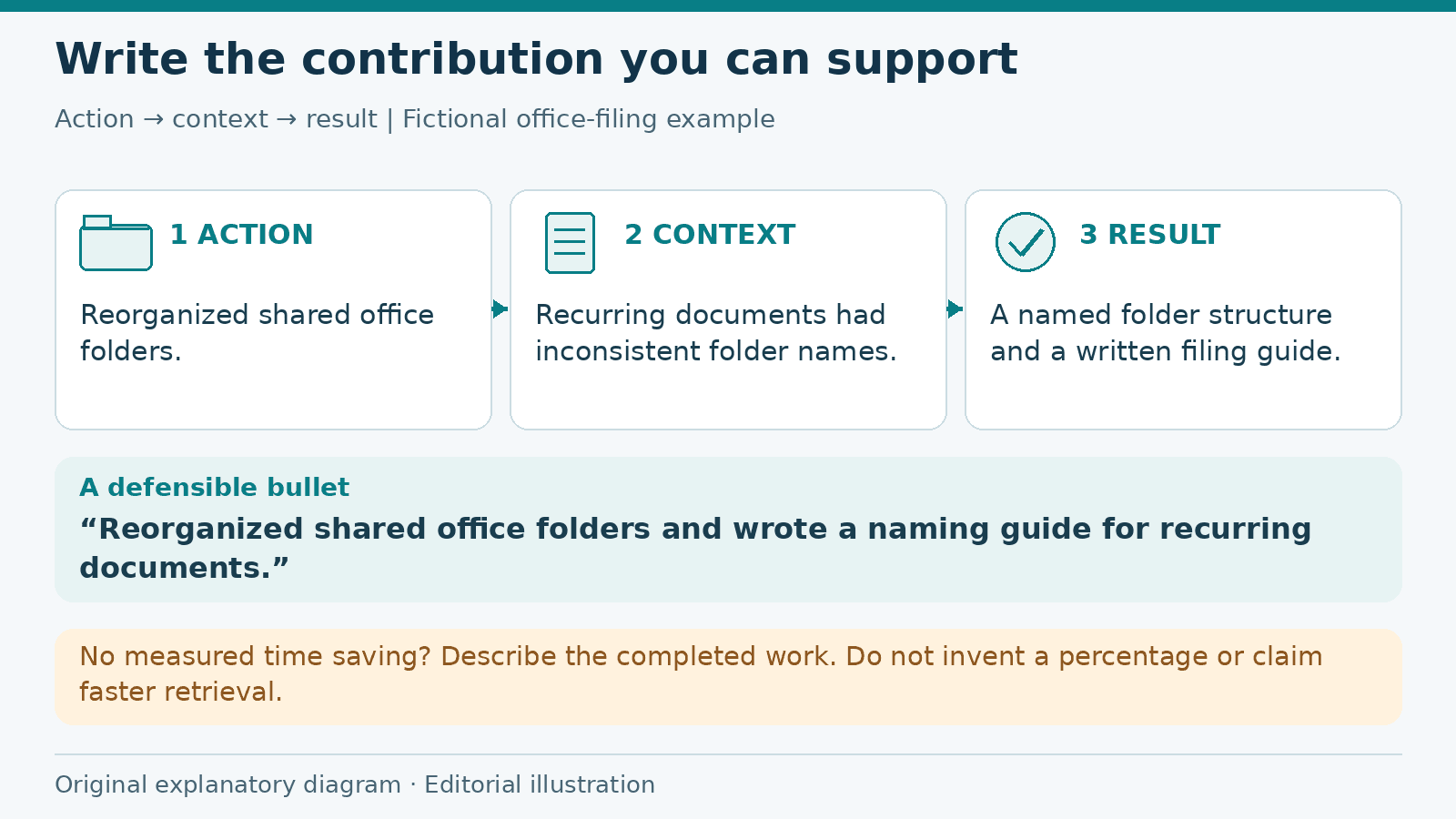
How to Write CV Achievement Bullets Without Inventing Numbers
Write specific CV achievement bullets using real actions, qualitative evidence and verified results. Includes fictional rewrites and a final checklist.
Read more
Binance Hack 2026: What Happened and Why It Matters
The Binance hack in October 2026: what Binance has confirmed, how signing systems can be abused, and practical security lessons for developers and users.
Read more
Comments (0)
Sign in to join the discussion.
No comments yet. Start the conversation.