
Article
How to Get Clients: Build a Relationship Before Asking for Work

“I love you. Will you marry me?”
Sometimes, these two sentences can be very annoying if you hear them from a random person at a random time.
But sometimes, these are the two sentences we are waiting to hear from the right person at the right time.
The words are the same. But our reaction can be completely different.
Why?
Because it is not only about what someone says. It is also about who is saying it, how well we know that person, and whether we are interested.
Now, think about the messages we send to potential clients, professional connections, or HR professionals.
“Do you have any projects for me?”
“Can you refer me?”
“Please check my CV and arrange a job for me.”
There is nothing wrong with looking for work or asking for help. But sometimes, we ask for a commitment before the other person even knows us.
Almost like saying, “Will you marry me?” before introducing ourselves.
So, how to get clients without making every conversation a sales pitch?
When you are reaching out to a client
Imagine you run a business and receive this message:
“Hello, sir. I am a web developer. Do you have any work for me?”
What would you reply?
You may not need a developer. You may already have one. Or you may need someone, but you have no idea whether this person can do the work.
Now imagine receiving a different message:
“Hi, I was checking your website and noticed that the booking form is difficult to use on mobile. I work on these kinds of issues. Would it be okay if I sent you a short explanation of what I noticed?”
At least now, you know why this person contacted you.
They are not asking you to find something for them to do. They have noticed something specific and are asking whether you want to discuss it.
Of course, only mention a problem if you have actually checked it. Do not send the same “your website has problems” message to every business.
If the client asks what you found, you should have an answer.
You do not need to complete a whole project for free to get someone’s attention. But you should give them a reason to continue the conversation.
A connection request is not a relationship
Sometimes, we send someone a connection request on LinkedIn. They accept it, and within a minute, we send our CV, portfolio, service list, and a request for a meeting.
The person has just accepted a connection request.
They have not agreed to review our career or become our client.
Think about meeting someone at an event. Would you immediately hand them all your documents and ask them to arrange work for you?
Most probably, you would introduce yourself first. You might ask about their work and find out whether you have something relevant to discuss.
We can do the same online.
If you liked something they wrote, mention what you liked. If you are working in a similar field, explain the connection. If you have a specific question, ask it clearly.
But please do not write, “Your recent post was very insightful,” if you have not read the post.
What will you say if they ask, “Which part did you find useful?”
Networking does not mean you must become someone’s close friend before discussing work. You can be direct about your purpose without making a large request in your first message.
When you are messaging HR
An HR professional may be hiring for a position that matches your experience. In that case, a clear message about the role can be useful.
For example:
“Hi, I saw the opening for a frontend developer at your company. I have two years of experience with React and have applied through the job link. My recent work includes a booking dashboard similar to the product mentioned in the job description. I’m sharing my portfolio here in case it is relevant.”
This gives the person something specific to look at.
Compare that with:
“Hi.”
Then, after they reply:
“Are you HR?”
Then:
“Any job?”
By the time you explain what you are looking for, both of you have already spent time on a conversation that could have started with one clear message.
Mention the role, your relevant experience, and whether you have applied. If there is a reference number, include it.
And if the job post asks you to apply through a particular link, use that link. Sending a private message should not be a way to avoid the application process.
Also, knowing someone in HR does not mean they can arrange a job for you. There may be no suitable opening. The hiring decision may involve several people. Your experience may not match the current requirement.
A professional relationship can help you understand an opportunity. It cannot replace being suitable for it.
What about following up?
You sent a message. There is no reply.
Now what?
First, give the person some time. You do not know what their day looks like.
After a reasonable gap, you can send a short follow-up. Mention the original reason for contacting them so they do not have to search through the conversation.
But sending “Hello?” every morning does not add anything.
Neither does:
“???”
“Waiting for your reply.”
“Why are you ignoring me?”
You may be worried about finding work. That feeling is understandable. But the person receiving your message may not know your situation, and repeated messages can make the conversation uncomfortable.
Follow up respectfully. If there is still no response, continue looking for other opportunities.
Do not disappear until you need something again
Suppose someone helped you with a referral or gave you feedback on your proposal.
Did you thank them? Did you let them know what happened?
A short update is enough.
“Thank you for referring me. I attended the interview yesterday.”
Or:
“I updated my portfolio using your feedback. The project descriptions are much clearer now. Thank you.”
You do not need to message them every week to keep the connection alive. But if someone spent time helping you, acknowledging that effort matters.
And please do not turn every conversation into another request.
Sometimes, you can share an opportunity relevant to their work, answer a question they asked, or simply congratulate them on something you genuinely care about.
Not because you are keeping a record of favours. Because there is another person on the other side of the conversation.
The client, the professional connection, and the HR person are all people with their own work, priorities, and limitations.
Before asking them to commit their time, reputation, or money, help them understand why your request is relevant.
You can still ask for the project. You can still ask for a referral. You can still express interest in a job.
Just remember that accepting your connection request is not the same as saying, “Yes, I will marry you.”
How I build these relationships
For me, I never approach someone as a client in the first meeting. Actually, I don’t think of them as clients or prospects at all. I treat them like friends.
I start with a normal conversation. I talk about my work, my capabilities, and the ideas I am thinking about. I also listen to what they do and what they are working on.
I know these people probably receive dozens of pitches and proposals. If I send another one, I may be ignored or asked the same questions as everyone else.
So, instead of immediately asking, “Do you have any work for me?” I give them a chance to know me and understand my work.
That does not mean pretending to be someone’s friend because I want a project. I enjoy the conversation even if we never work together.
But if they need something I can help with later, they already know what I do. They don’t have to discover me through another proposal.
How you can apply this on ALHarih
On ALHarih, you can bid on projects. But when hundreds of other people are bidding too, how likely is your proposal to be accepted?
If a hundred people apply and only one gets selected, you can imagine the competition. Your actual chances will depend on your experience, the relevance of your proposal, and what the client needs.
Sometimes, it feels like messaging your influencer crush and waiting for a reply.
Forget about getting a reply. Has the person even seen your message?
I prefer a different approach.
Instead of only sending messages, I create a profile that showcases me. I share my work, my ideas, and parts of my life through Instagram stories. I focus on building an audience and giving people a reason to follow me.
Then, some of the people I wanted to connect with start following me too. Some message me first. Now I can decide which conversations I want to continue.
You can apply the same idea to your professional presence on ALHarih.
1. Build a profile that gives people something to look at.
Explain what you do. Show relevant work. Make it easy for someone to understand where you can help.
If someone opens your profile after reading your proposal, what will they find? Give them more than a job title and “I am hardworking.”
2. Create a service that explains what someone can hire you for.
Be specific about the work you offer, what is included, and what the client needs to provide.
A client should not have to interview you just to understand what you are selling.
3. Write articles that show how you think.
Explain a problem you solved, share something you learned, or answer a question your potential clients ask.
You do not need to keep saying, “I am an expert.” Let people see how you approach the work.
4. Pay attention to SEO.
Use clear titles and relevant phrases in your profile, services, and articles. Think about what someone would search for when they need your help.
Write for that person. Do not fill every sentence with keywords.
None of this guarantees that clients will message you tomorrow. You still need good work, relevant proposals, and patience.
But now, bidding is not the only way someone can discover you.
Your proposal can introduce you. Your profile, services, and articles can help them get to know you.
And when you finally discuss working together, you are no longer a random person asking, “Will you marry me?”
Cover image: AI-generated illustration of fictional professionals, not a documentary photograph.
Read next
View all articles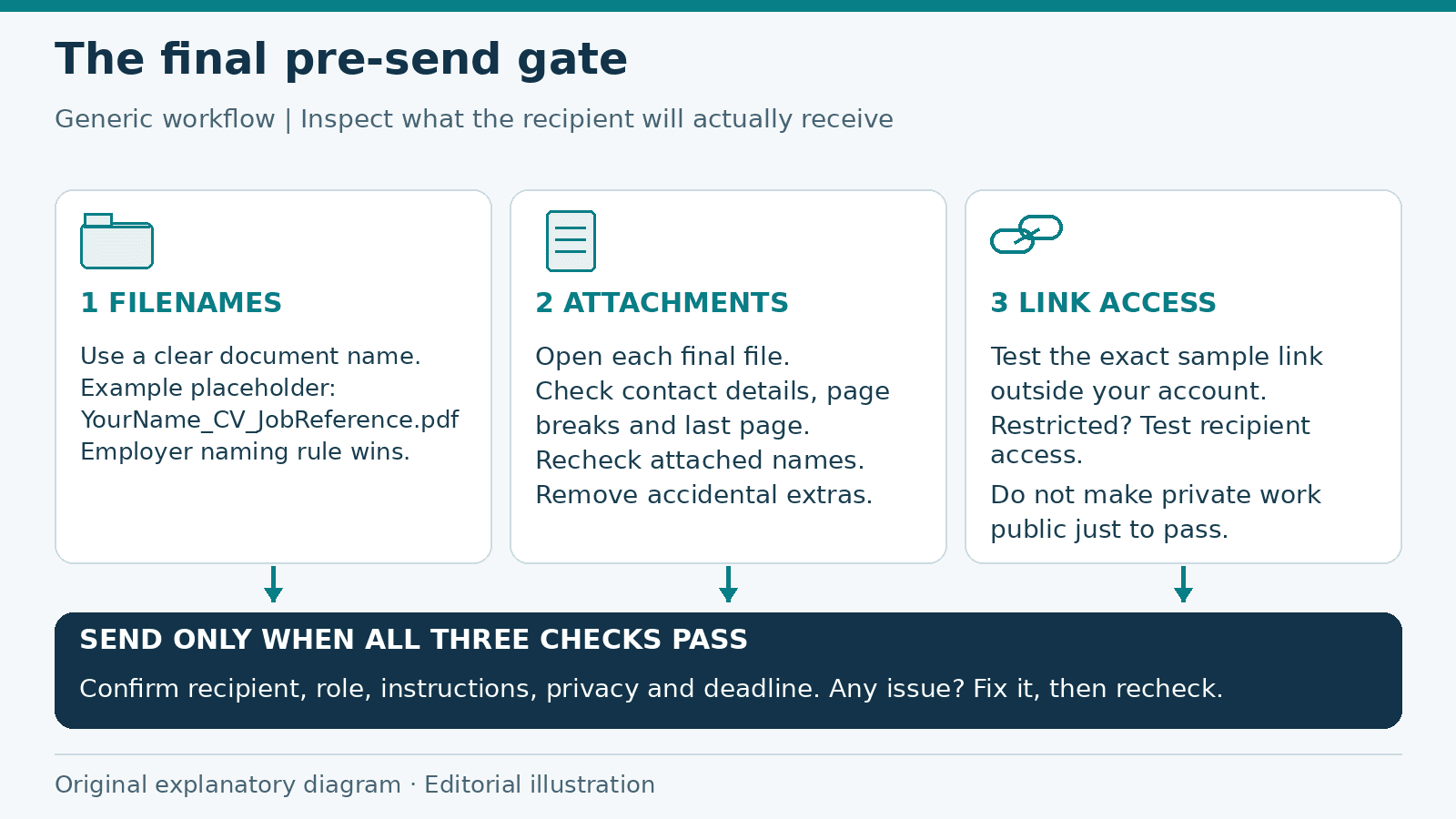
Job Application Checklist: Final Checks Before You Send
A final pre-send review of application filenames, attachments, link permissions and private information, with a checklist to catch preventable mistakes.
Read more
Fixed-Price or Hourly Freelance Work: How to Choose
Compare fixed-price and hourly freelance work, explore the pros and cons of each pricing model, and discover how to choose the best option for your projects and income goals.
Read more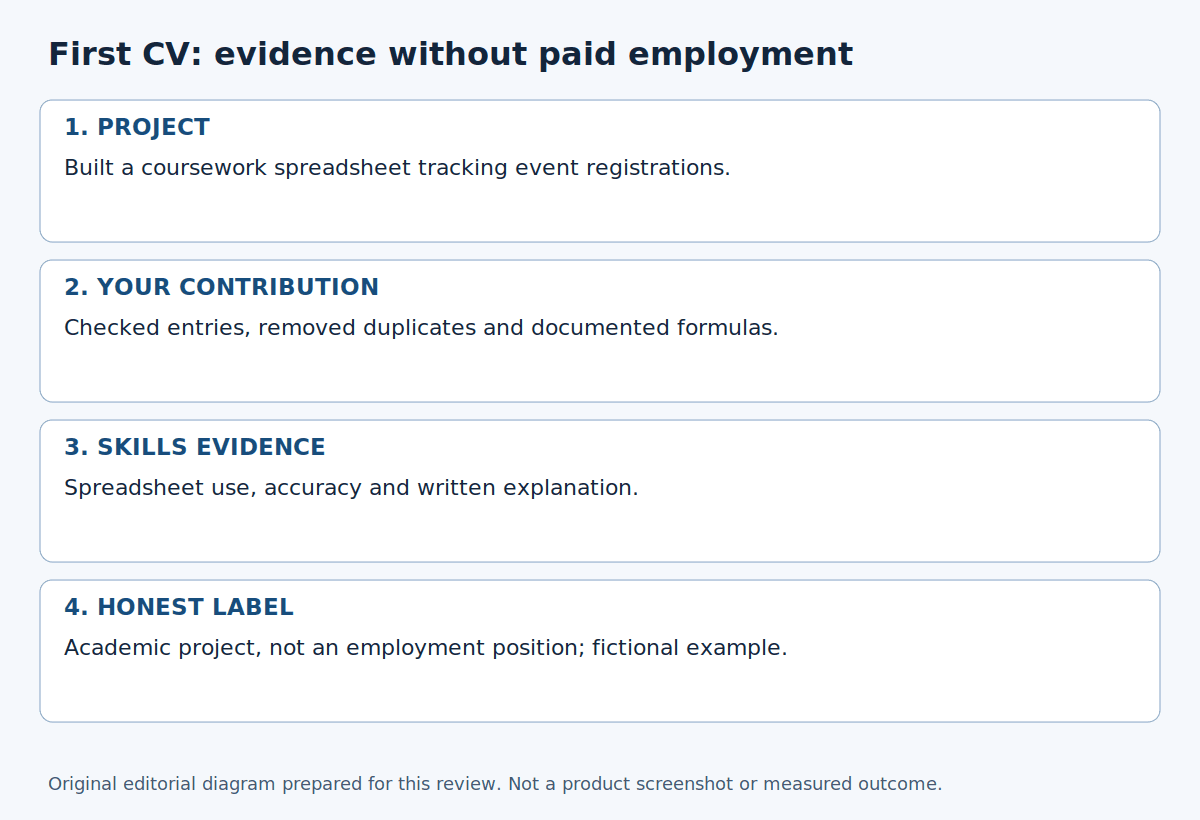
CV with no work experience: projects and volunteering
Turn coursework, personal projects and volunteering into clear evidence for a first CV. Label the context honestly and explain your own contribution.
Read more
Comments (0)
Sign in to join the discussion.
No comments yet. Start the conversation.