
Article
My First IELTS Exam Experience: I Interview Thousands of Candidates, but I Was Nervous Once, Too.
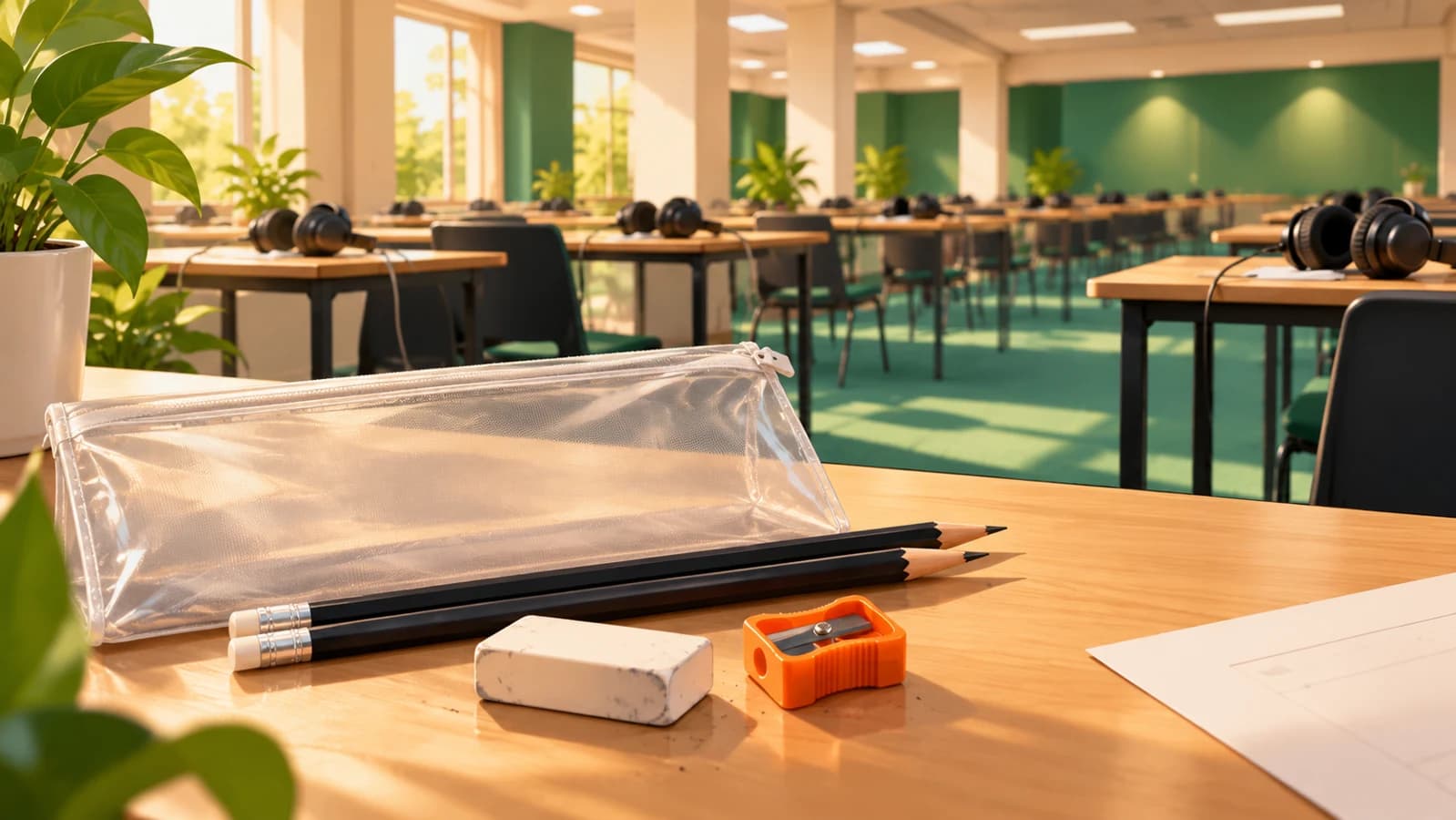
Have you ever thought that the CTO of ALHarih, a talent network connecting skilled professionals with opportunities, who interviews and assesses thousands of candidates, was once afraid? My first IELTS exam experience might surprise you.
Yeah, it happened during my first IELTS exam.
I was so nervous. I arrived two hours early and sat in a café outside the test centre for a while. I didn’t bring my phone because I thought, “What if they don’t allow it and there is no place to keep it?”
I had already taken a mock test at the same venue. Still, I was expecting surprises. I was even confused about what to wear. Anyway, here is the full story.
Exam venue: GREC Banani – British Council IELTS Test Venue
Centre number: BD0001
Dates: September 15, 2022 (Listening, Reading, and Writing), and September 17, 2022 (Speaking)
This is my personal experience of a paper-based IELTS exam in September 2022, not a guide to current test rules. Check your test provider’s latest instructions before your exam.
Cover image: AI-generated illustration inspired by my test-day stationery and venue photos. It is not a photograph of the actual test centre.
Booking my IELTS test (August 30)
Even though I could easily register online, I visited GREC Banani’s office, and they did the registration for me. As a result, I got a free mock test from GREC.
My IELTS mock test at GREC Banani (September 2)
The mock test took place at the same venue. That was a good opportunity for me to experience the test hall before the actual test.
But the mock test was a little different from the actual test. I’ll discuss that later.
Inside the GREC Banani IELTS test venue
There was a small waiting room, with two washrooms attached to it. There was a big hall right beside the waiting room. In the hall, there were several tables and chairs. Each table had a dedicated set of wired A4tech headphones. There were several clocks in the room. Two of them were digital, and one was analog.
There were two small rooms attached to the big hall. The signs said “Speaking Room 1” and “Speaking Room 2.”
IELTS exam day: Listening, Reading, and Writing (September 15, 2022)
Arriving early and waiting in a café
I woke up early and put some necessary stuff in my bag: a pen, four pencils, an eraser, a pencil sharpener, a water bottle, a packet of tissues, and my passport. I arrived two hours before my reporting time and sat in a café outside the test centre for a while before going in.
There was a staff member, most probably a security staff member. She told me to bring a photocopy of my passport. Then I got a photocopy from a stationery shop on the ground floor and entered the waiting room.
Passport checks and IELTS test registration
They asked candidates to switch off their phones and wear masks. I had left my phone behind, but I didn’t have a mask with me, so they provided me with one.
Then, in the waiting room, they asked everyone to submit their passport photocopies. They gave me a piece of paper with my candidate number written on it. After that, they took all my belongings, sealed them, and attached a piece of paper with my candidate number on it.
Then I entered the hall. There was a desk beside Speaking Room 1, which was being used as the registration room. There was a woman at the desk. She rechecked my passport and checked my name on her list. After that, I was asked to enter the registration room.
In the registration room, there was a man with a camera and a laptop. They told me to give my fingerprint five times. I tapped four times before my photograph was taken and once afterwards.
Then he told me my candidate number and took the piece of paper, handing me only my passport.
After registration
Another gentleman helped me find my seat. At each seat, there was a transparent bag branded with British Council IELTS. It contained two pencils, a branded pen, a pencil sharpener, and an eraser.
At that time, I remembered that I had forgotten to keep my pencils and water bottle with me. Unfortunately, they didn’t allow me to leave my seat and go out. However, they offered me water from the filter. That seemed fair!
The waiting period
There was a long waiting period. It was just 11:10 AM, and the start time was 1:00 PM. I raised my hand and asked them to let me go to the washroom. The response was negative. They told me to wait until they announced a washroom break.
Also, to use the washroom, you had to register your name on a list and hand over your passport. Be aware that the washroom might not be vacant. If you were unlucky like me, you would need to wait in the waiting room for 10–15 minutes. Unfortunately, I was unaware that even though there were two restrooms, only one was for men.
My IELTS Listening test experience
We were given a question paper and an answer sheet. All my information was written on a piece of paper attached to my desk.
They also had a whiteboard where the date, centre number, and other information were written. Audio instructions were also given.
They handed us the headphones and told us to put them on. They ran audio tests several times. One male candidate reported an issue, and they relocated him to another seat. There were quite a few empty seats. Maybe many people were absent.
The listening test began at 1:05 PM. The recording felt slower to me than those in the Cambridge practice materials (books 1–17). I had enough time to read the questions. I used the time to highlight keywords and predict the answers. Even after reading questions 1–5, I tried to go back and read questions 1–3 again. That was how I made sure I wouldn’t miss the first three questions and lose my confidence.
The good thing was that there was no map. I hate maps. In addition to that, there were so many multiple-choice questions.
So, no worries about spelling. Honestly, I’m weak at spelling, thanks to auto-correction. Listening was a piece of cake for me.
Part 4 was easy as well, but there was less time to read the questions. Also, one question was on the opposite page. So, be careful about that. Despite having less time to read the questions, I found it easy because the answers were given directly.
Finally, the audio stopped, and I had to transfer all the answers to the answer sheet within 10 minutes. Although some people suggest writing everything in capital letters, I feel comfortable writing according to the blank or question.
Remember, we were not allowed to leave our seats while the listening test was running.
They also instructed us to stop writing as soon as the time was up. But I noticed more than five candidates continuing to write after time was called. This happened repeatedly during the exam. One of them even argued with the examiners to let him write one word.
My IELTS Reading test experience
The answer sheet was the same. I just had to flip it over. I had to fill in my information on both sides. I got a 5–10-minute break before the reading test. But they didn’t let me leave my seat to drink water. So, make sure you bring your water bottle. I lost three minutes of the reading module just getting water.
The first reading passage was easy, but it was difficult to find direct answers. I followed this method:
- First, read the first line of every paragraph and try to understand what the paragraph is about. If needed, read the next line or the last line.
- Highlight one or two keywords from the line.
- Then read all the questions quickly. Now you have an idea of where the answers should be. Just find them.
- If you can’t find an answer, mark the nearest relevant lines and the question. After that, skip the question.
- After finishing all the other questions, you may find the missing answers. If not, just predict the answers.
- Move to the next passage and repeat the same process.
I suggest practising this technique several times before trying it in an exam. What worked for me may not work for everyone.
Another trick I used was writing down the answers on the question paper. My plan was to finish each passage within 17 minutes and use another three minutes to transfer the answers to the answer sheet.
Unfortunately, I missed two answers and guessed three or four.
My IELTS Writing test experience
Again, I got a little time before the writing module. They gave us separate sheets for Tasks 1 and 2, which was different from the mock test.
Also, we had to fill in both answer sheets with the same information. Take care not to begin writing Task 1 on the Task 2 sheet. A few students did this. Then they had to erase it and start over.
Task 1 was a line chart. It was very easy. But the problem was managing the time.
If you asked, they would immediately give you an additional answer sheet, which was identical to the main answer sheet. And you needed to fill in all your information again. That was a hassle, and I was not prepared for it.
However, I finished everything before time was up. Unfortunately, I was not able to revise everything. Again, thanks to Grammarly and auto-correction, my writing usually contains too many mistakes, as I don’t pay much attention to them most of the time.
After the test
They told us to stay in our seats. All our belongings were delivered to us. Then I took mine to the waiting room to check if anything was missing. Fortunately, everything was okay.
My IELTS Speaking test experience (September 17)
At the time of my exam, the speaking sessions were conducted through Zoom from the test venue. The meetings were recorded. The experience was very different from the mock test.
Again, I arrived one hour earlier than my reporting time. My reporting time was 11:20 AM, and my test time was 11:40 AM.
I waited in the waiting room after turning off my mobile phone and putting on a mask. The exams were running. They were taking two candidates at a time.
They allowed me to enter the hall at 11:25 AM. Again, I had to hand over my stuff. I only kept my passport with me.
A lady checked everything and led me to Speaking Room 1, where there was a laptop and a calling bell. Everything was set up properly. She joined the Zoom meeting, handed me the headphones, and left the room.
The interviewer was a woman. She asked me seven or eight questions in Part 1. Then the cue card was presented on the screen in Part 2. There were two pencils, an eraser, a pencil sharpener, and a bunch of A4-sized papers on the table. I got one minute to generate ideas and take notes, and two minutes to speak. Then, in Part 3, she asked me some follow-up questions.
After that, the meeting ended, and I pressed the bell, but it didn’t work. So, I had to come out of the room and call the person who was guiding me.
What I learned from my first IELTS exam experience
The overall experience was great. The examiners were really pleasant, and the venue provided the writing supplies I needed. Still, I would have been more comfortable if I had kept my water bottle with me and understood the arrangements beforehand.
My results were due to be published online on September 28, with the hard copy to be delivered later. At the time, I was excited to receive them. After all that worrying, I had finally finished the exam.
An earlier version of this article was previously posted on Facebook.
If you’re nervous about your next interview
Now, when I interview candidates at ALHarih, I remember how nervous I was before my own exam. I had taken a mock test. I had prepared. Still, I was worried about what might happen.
So, if you feel nervous before an interview or an assessment, I understand. You might be confused about what to wear, what they will ask, or what will happen if you cannot answer a question. I had those worries too.
You don’t have to wait until you feel completely confident to apply for a job.
Prepare as well as you can, be honest about what you know, and give yourself a chance. If an interview doesn’t go well, think about what you can improve and take that experience into the next one.
Look for jobs on ALHarih and start applying for roles that match your skills and interests. Don’t reject yourself before you’ve even applied. You may still feel nervous, but you can take that first step anyway.
Read next
View all articles
How to Prepare for a Recorded Video Interview
Learn essential recorded video interview tips to answer questions confidently, improve body language, set up your camera, and make a strong impression on employers.
Read more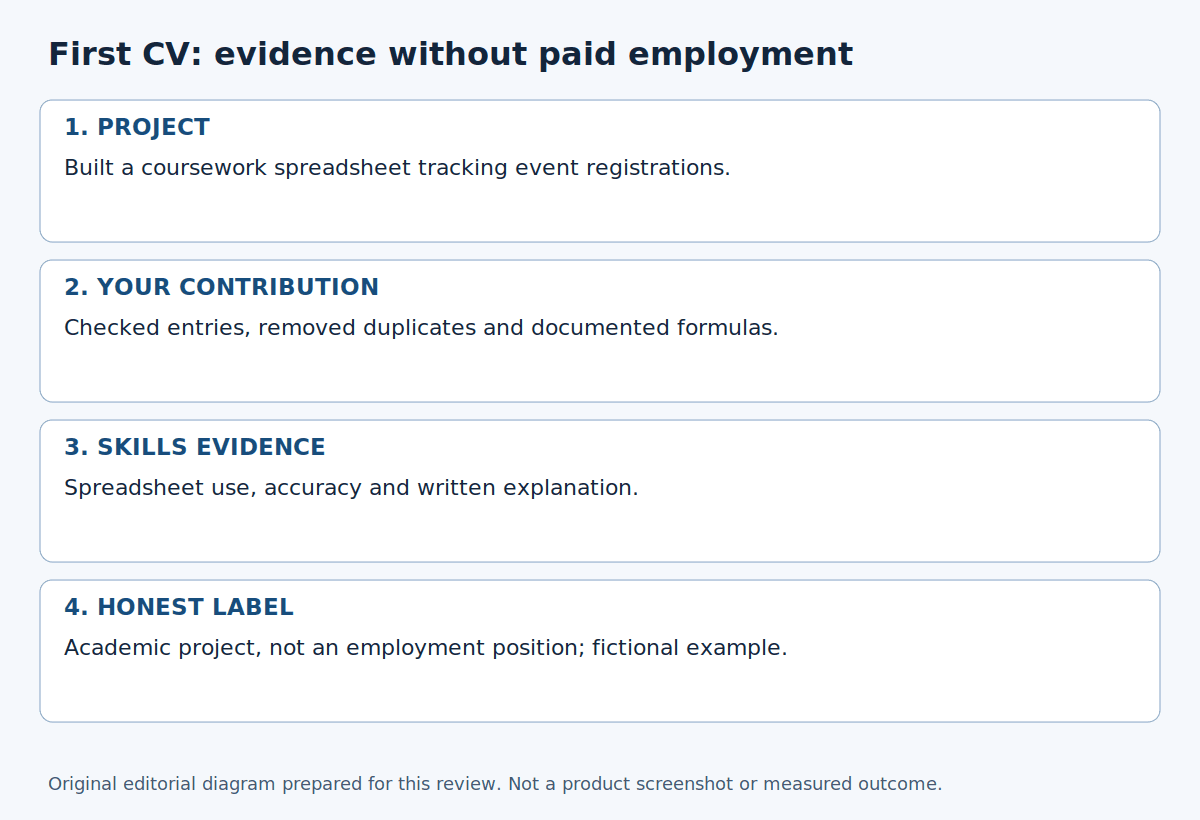
CV with no work experience: projects and volunteering
Turn coursework, personal projects and volunteering into clear evidence for a first CV. Label the context honestly and explain your own contribution.
Read more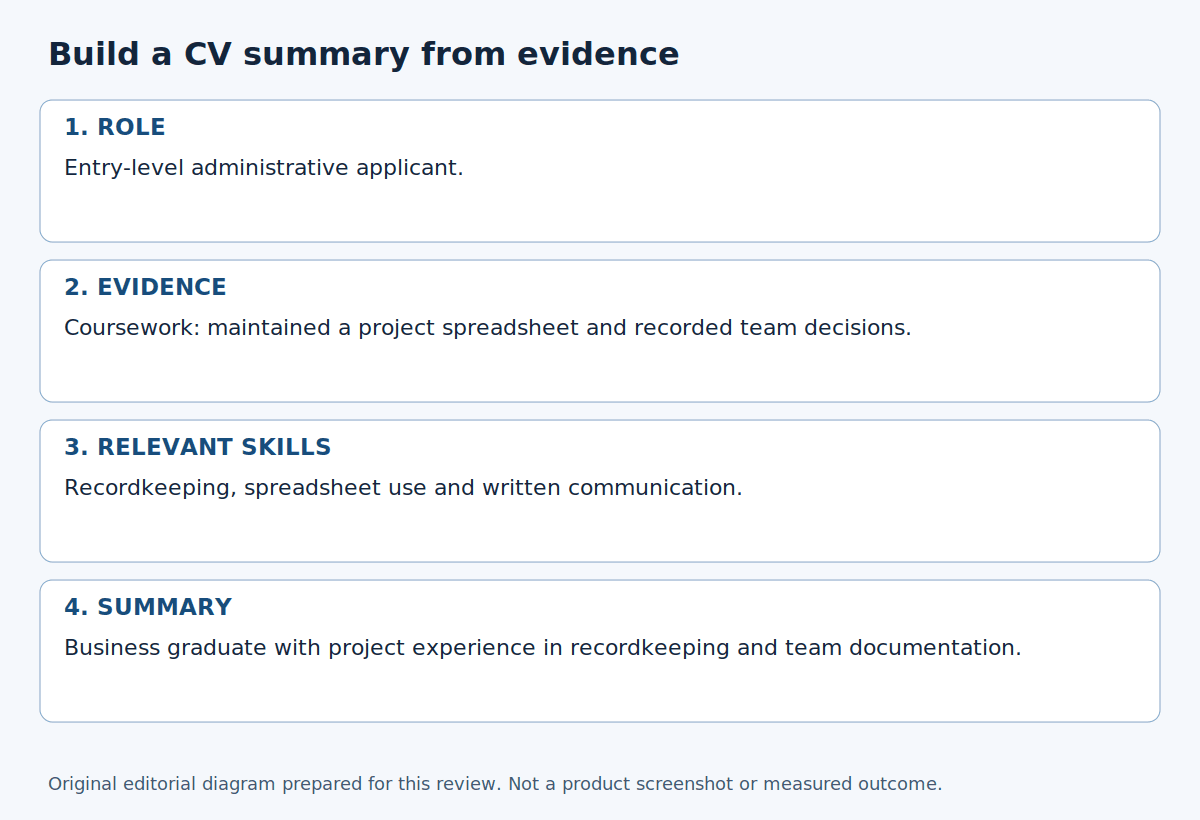
How to Write a Professional CV Summary with Examples
Write a concise CV introduction grounded in real experience. Compare six hypothetical summaries and replace empty claims with specific evidence.
Read moreExplore related career opportunities
Find roles that fit your location and interests. Each listing explains its current or planned vacancies.
All locations, roles and employment types
Comments (0)
Sign in to join the discussion.
No comments yet. Start the conversation.