
Article
How to Write a Professional CV Summary with Examples
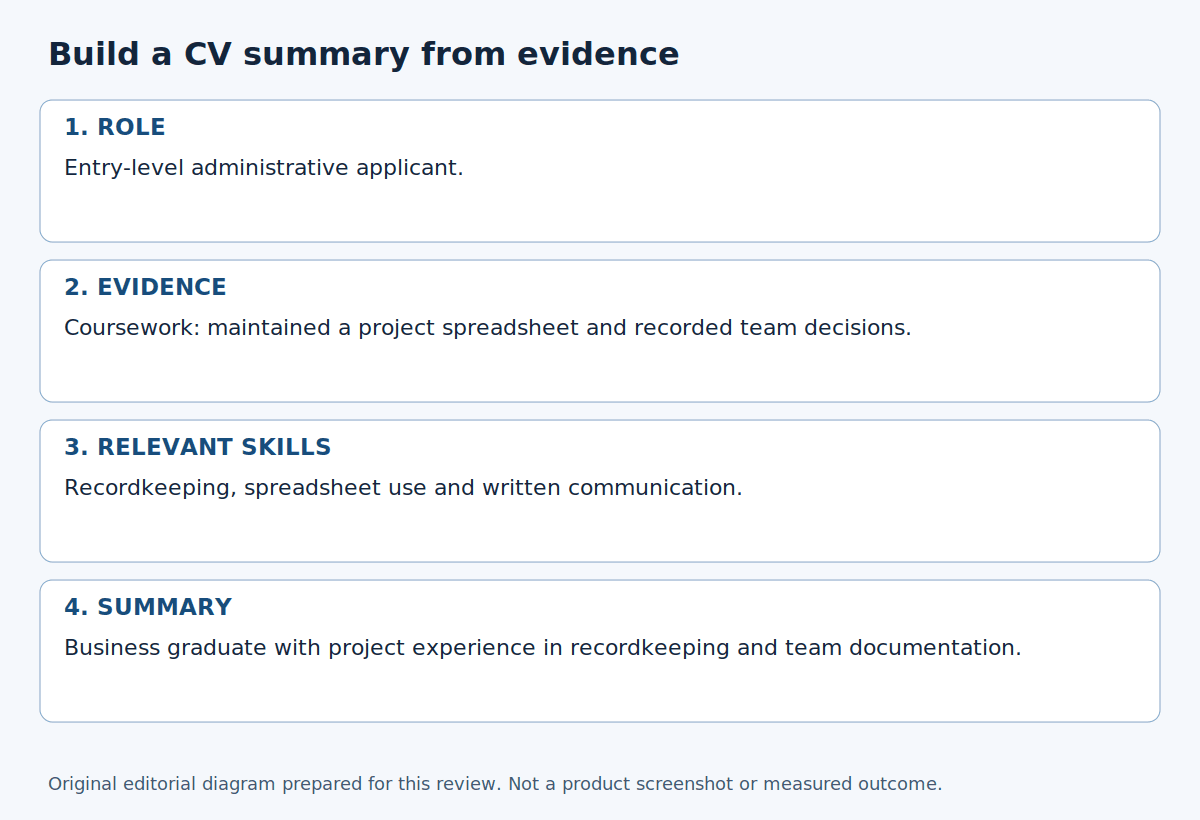
A professional CV summary should give the reader a useful starting point: what kind of work you do, which strengths fit the vacancy and what supports those strengths. "Hardworking, results-driven team player" takes up space without answering those questions.
Write the summary after reviewing your experience and the job description. That makes it easier to choose a few relevant facts instead of trying to describe your whole career. The examples below show how to do this at different career stages; none describes Shanta's employment or a verified hiring outcome.
Summary or objective?
A summary concentrates on what you bring to a role. An objective usually puts more emphasis on the work you want next. A career changer or first-time applicant can combine the two: identify a genuine background, show relevant evidence and name the intended direction.
You do not need to present yourself as an experienced professional to write a useful introduction. The National Careers Service describes a CV introduction as a few short lines below the contact details. It also points applicants with a short work history towards projects and volunteering as possible evidence of skills.
Aim for two to four sentences as an editing guide, not an employer rule. Around 40–80 words can be a rough drafting range, but do not add filler to reach a number. A shorter summary is enough when it says what the reader needs.
Use a role-specific formula
Start with your background or career stage. Add relevant activities or strengths, then a concrete basis for them. Include your target direction if it helps explain a change. This is a drafting aid, not a sentence pattern you must follow.
For example, "Administrative professional with experience in document preparation and scheduling" is more informative than "Hardworking person seeking a good job". But it is accurate only for someone who has that experience. A graduate could instead start with their qualification and academic project work.
Read the vacancy before choosing which strengths to include. An administrative post may call for recordkeeping and scheduling, while a service role may focus on enquiries and complaint handling. Select the parts of your background that fit, without adding skills simply because the advert mentions them.
Replace adjectives with evidence
Ask what sits behind each description. If you write "organised", can you point to a schedule you maintained or information you kept in order? If you write "experienced", does the rest of the CV explain the work and its context?
Harvard's resume guidance recommends specific, active and fact-based language rather than general or flowery wording. You do not need an impressive statistic for every strength. Describe a responsibility, output or relevant activity when you have no reliable numerical result.
Only mention years, qualifications and achievements you can support. Do not turn a team project into an individual accomplishment or describe introductory training as specialist expertise. If an employer asks about a statement, you should be able to explain it in ordinary language.
Six hypothetical professional CV summary examples
These fictional examples demonstrate different choices of evidence. They are not copy-ready biographies, Shanta's accomplishments or promises of interviews. Use only wording that reflects your own background, then make sure the rest of your CV supports it.
Recent business graduate
"Recent business graduate with academic project experience in spreadsheet recordkeeping and team documentation. Maintained an event-registration sheet during a course assignment and prepared written project updates. Seeking an entry-level administrative role."
The education and academic setting are explicit. This applicant has not turned the project into a paid office job or claimed years of experience.
Administrative assistant
"Administrative assistant experienced in scheduling, document preparation and shared office records. Coordinates meeting information, maintains filing systems and follows up on outstanding paperwork with colleagues."
This version names recurring work instead of calling the applicant exceptionally organised. An experienced applicant could add a relevant, verified achievement if it helps distinguish their background.
Customer service representative
"Customer service representative with experience answering enquiries, documenting complaints and passing unresolved cases to the appropriate team. Uses clear written updates to explain next steps and keep case records current."
The summary describes observable responsibilities. It does not claim a satisfaction score, faster resolution or guaranteed customer retention without evidence.
Quality control inspector
"Quality control inspector experienced in checking incoming components and recording defects. Prepares inspection records, reports non-conformities and discusses findings with production colleagues."
Specific activities make this clearer than "committed to excellence". The applicant would still need to name relevant methods, tools or standards elsewhere if the vacancy requires them.
Career changer moving towards project coordination
"Customer support professional moving into project coordination, with experience tracking open cases, organising follow-up actions and sharing progress updates. Brings practical recordkeeping and communication experience while developing project-specific knowledge."
The change is visible. The applicant has not renamed their previous job or implied that handling cases is the same as managing a complete project.
First-time applicant with no paid work experience
"Entry-level applicant with school project and volunteering experience in organising information and coordinating tasks. Kept activity notes for a student group and helped prepare materials for a community event. Seeking an office support role."
The applicant uses relevant activities without inventing employment. They should describe these activities elsewhere under clearly labelled project or volunteering sections.
Worked edit: from an empty claim to a useful introduction
Suppose a fictional graduate begins with "Hardworking, results-driven professional with excellent skills". During revision, they list what they actually did: completed a business course, maintained a project spreadsheet and recorded decisions for a team assignment.
A more accurate draft is: "Recent business graduate with academic project experience in spreadsheet recordkeeping and team documentation. Comfortable organising information, checking entries and preparing written updates. Seeking an entry-level administrative role." The new wording identifies both the career stage and the basis for the skills.
Now compare the draft with the specific vacancy. If the employer values scheduling and the applicant has no evidence for it, they should not simply add that word. They can keep the supported strengths and decide whether the role is still appropriate. The aim is an honest introduction, not a perfect-looking match.
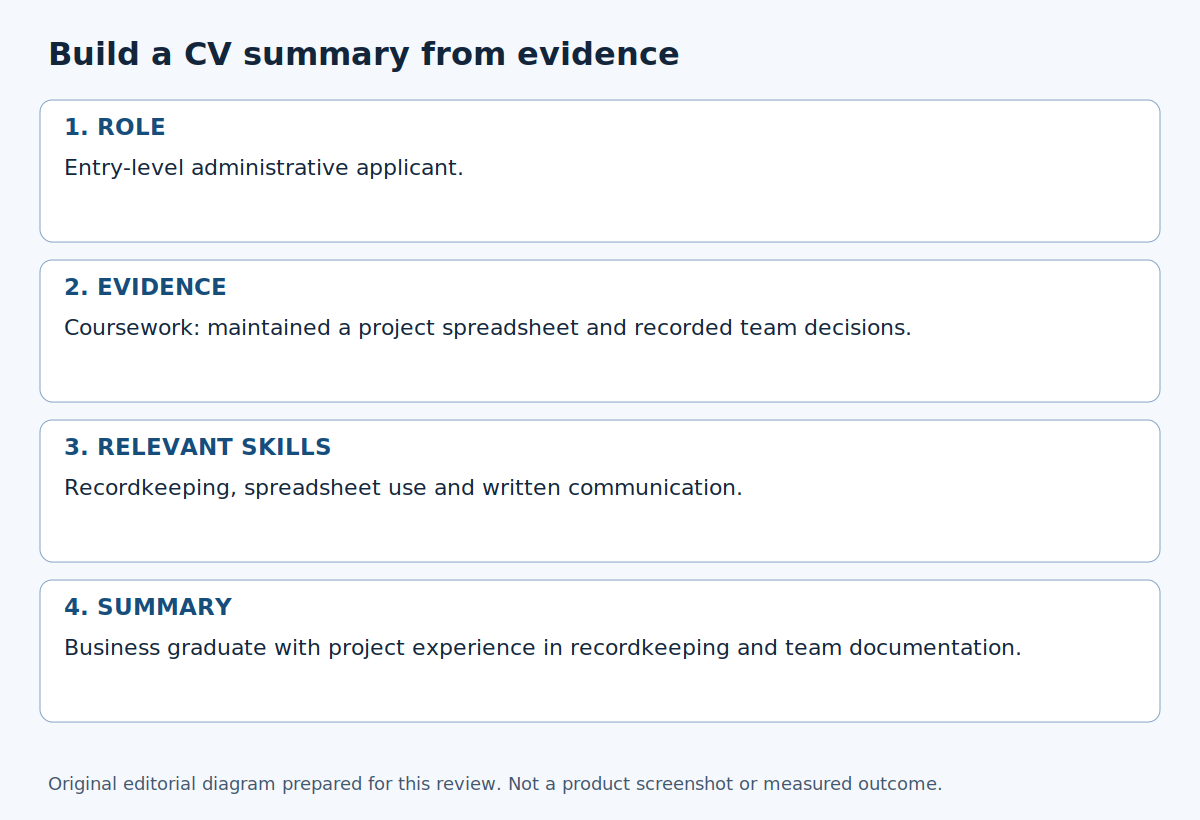
Original explanatory diagram generated for this editorial correction; not a product screenshot. The diagram contains no copied image assets. Source: this article’s worked example. No third-party image licence is asserted.
Edit the summary against the rest of the CV
Check every sentence for a supporting entry. Dates and job titles should agree with the work history. Project claims should appear under the relevant project, and qualifications should match the education section. Remove any statement that is stronger than the evidence beneath it.
Read it aloud once. Cut repeated ideas, long strings of adjectives and statements such as "eager to contribute to a dynamic organisation" unless they add something specific. Keep detailed duties in the experience section; the summary should help the reader know where to look next.
Before using the summary
- Does it identify your actual background or career stage?
- Are the selected strengths relevant to this vacancy?
- Can you explain the evidence behind each claim?
- Are academic, volunteer and paid activities distinguished?
- Have you removed invented numbers, experience and expertise?
- Does the wording agree with the rest of the CV?
- Have you checked spelling and the final exported layout?
Add it to your ALHarih CV
The public ALHarih Resume Builder page describes browser editing and PDF download. Draft the wording from your own evidence, then use the ALHarih CV builder guide for related instructions. Check the exported document rather than assuming the on-screen draft proves the final file is ready.
Public pages were checked for this article; authenticated saving, export and application submission were not tested. Read related ALHarih articles if you need help with the rest of your CV. A summary or template cannot guarantee compatibility with every recruitment system or a hiring decision.
Read next
View all articles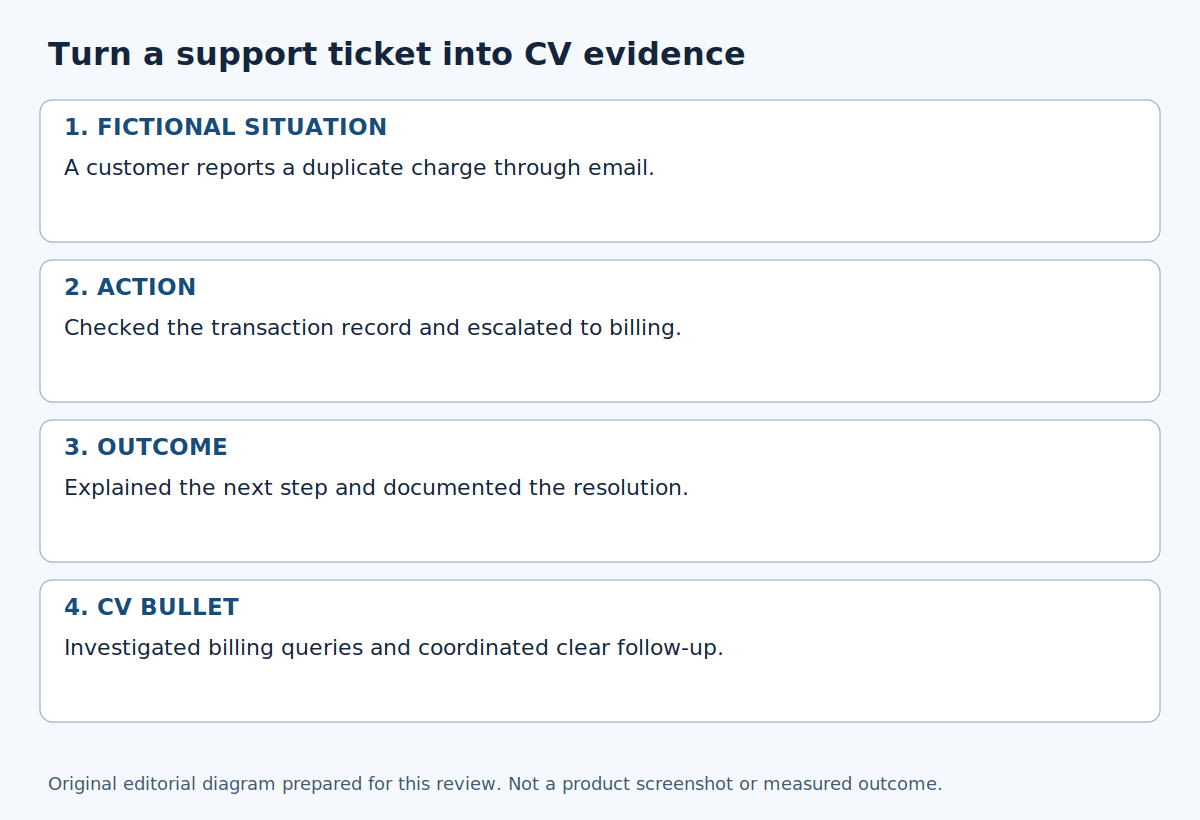
How to write a customer support CV with clear examples
Show what you did when customers needed help. Use clear CV examples, accurate tool descriptions and supportable outcomes without exposing private records.
Read more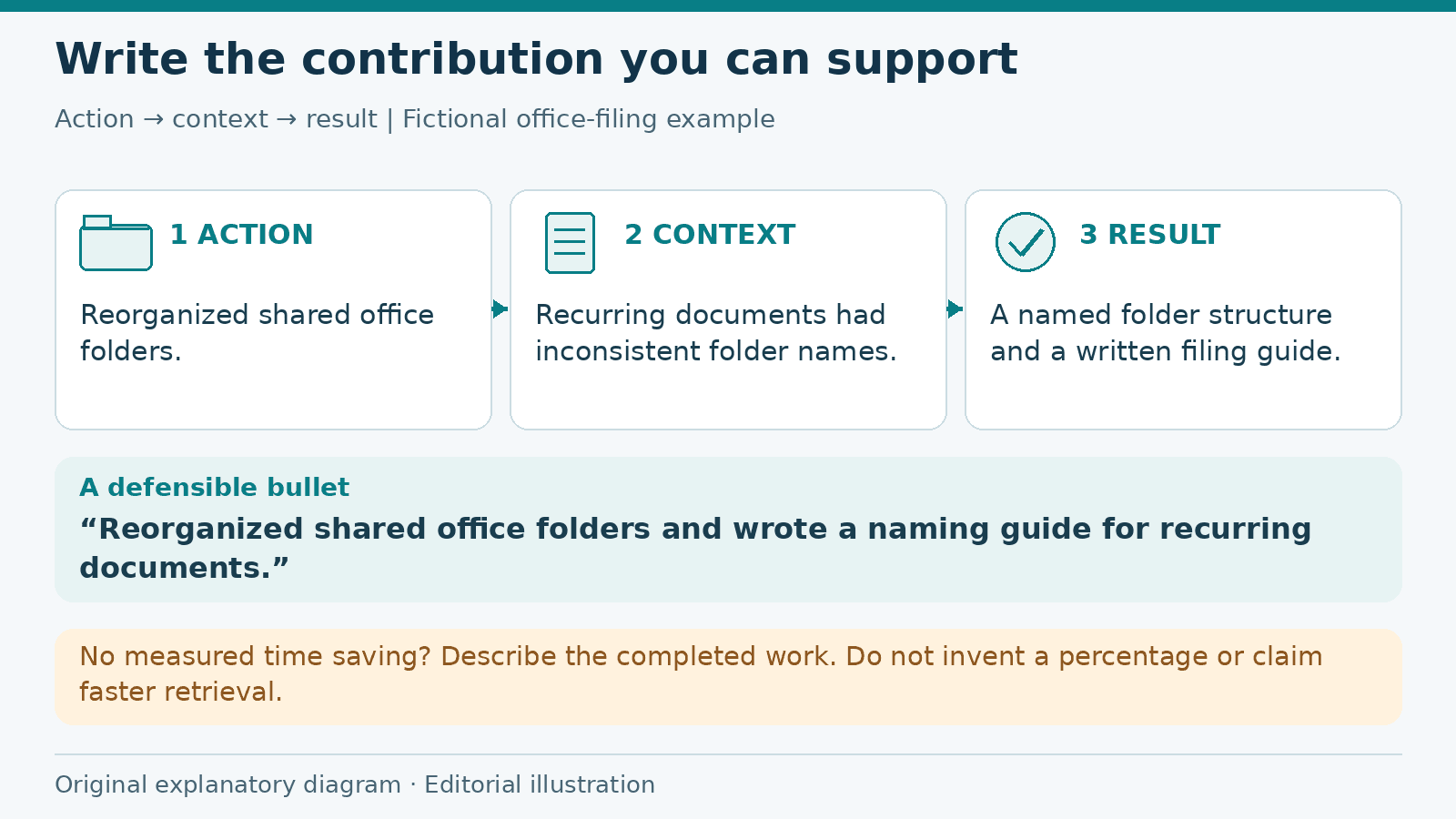
How to Write CV Achievement Bullets Without Inventing Numbers
Write specific CV achievement bullets using real actions, qualitative evidence and verified results. Includes fictional rewrites and a final checklist.
Read more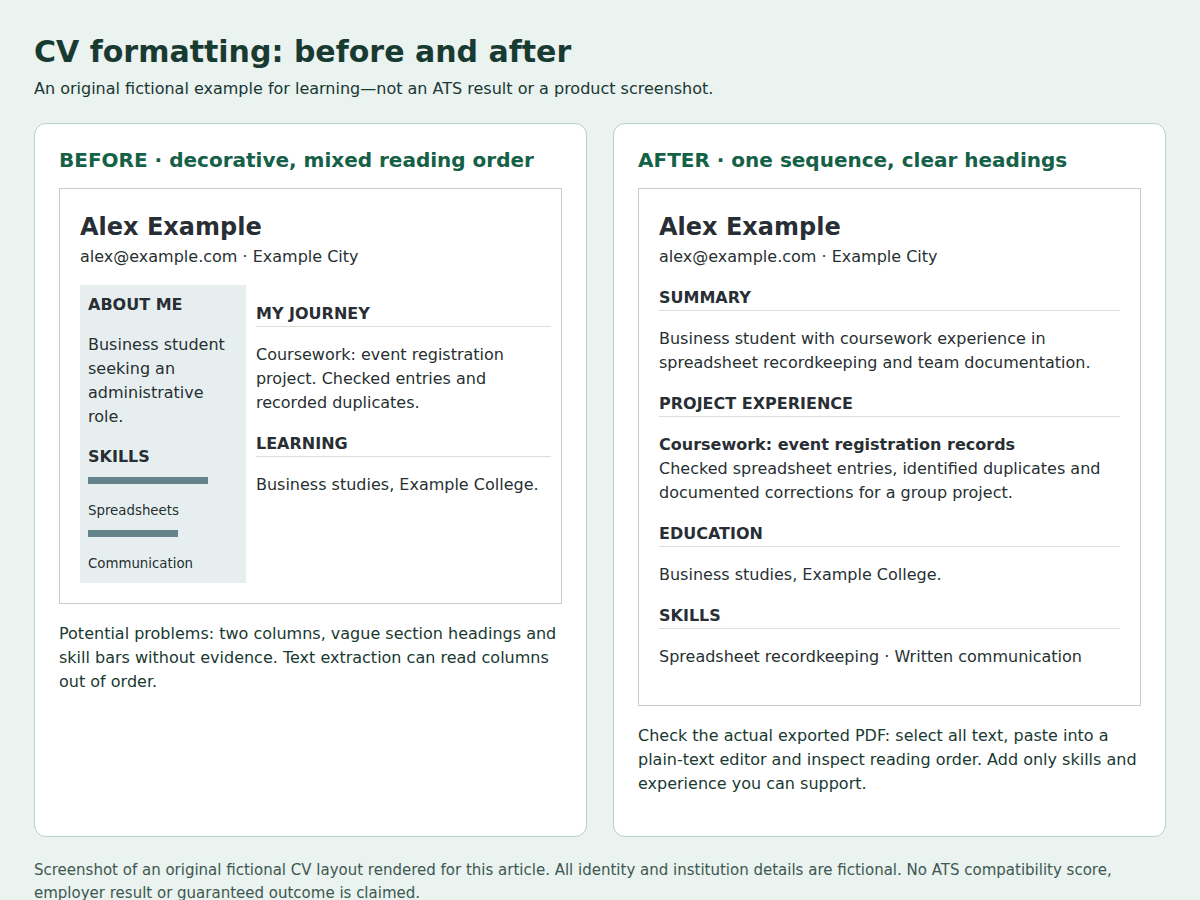
ATS-Friendly Professional CV: A Practical Checklist
Make your CV easier to read with a simple layout, evidence-based wording and checks on the exported file, without ATS-score promises.
Read moreExplore related career opportunities
Find roles that fit your location and interests. Each listing explains its current or planned vacancies.
All locations, roles and employment types
Comments (0)
Sign in to join the discussion.
No comments yet. Start the conversation.